Elizabeth of Töss is a blessed of the Catholic Church (b. 1292). Elizabeth of Töss's feast day is celebrated on 6 May.
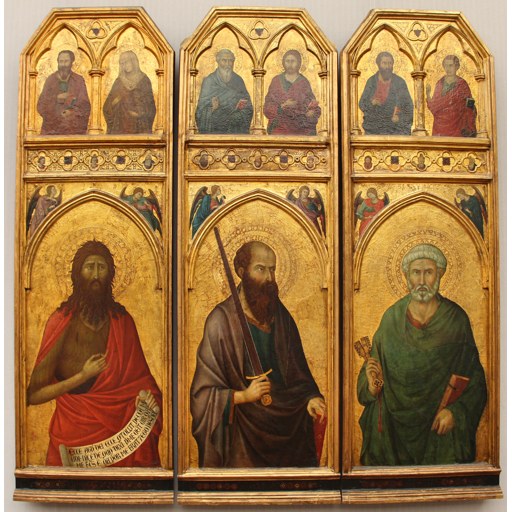
Sailko
License: CC BY 3.0
Elizabeth of Töss
Blessed- Life Span
- b. 1292
- Feast Day
- 6 May
- Gender
- female
- Church
- Catholic
Places
Relics & Where to Venerate
Location unknown
The bodily remains of Elizabeth of Töss are a first-class relic. Venerated at Töss Convent.
Roles & Family
Religious Information
Biography
Elizabeth of Töss, known in Hungarian as Árpád-házi Erzsébet and often called Blessed Elizabeth of Hungary to distinguish her from her more famous kinswoman Saint Elizabeth of Thuringia, was the only child of King Andrew III of Hungary, last monarch of the native Árpád dynasty, and of his first wife, Fenenna of Kuyavia. She was born in 1292, almost certainly at the royal residence of Buda. Her mother died while Elizabeth was still a small child; Andrew then married Agnes of Habsburg, daughter of King Albert I of Germany. The court in which she spent her earliest years already stood under the shadow of dynastic extinction: Andrew had no surviving son, and Angevin, Přemyslid, and other claimants were preparing to contest the Hungarian crown.
Andrew III died in January 1301, leaving the eight- or nine-year-old princess a pawn in the succession struggle that followed. She was at one point betrothed to Wenceslaus III of Bohemia, who briefly occupied the Hungarian throne, but the marriage was never solemnized. Queen Agnes withdrew with the child from Hungary. After a period associated with the Habsburg court, Elizabeth was placed in the Dominican nunnery at Töss, near Winterthur in the territory of present-day Switzerland, a house noted for strict observance and for its links with the mystical circles around Meister Eckhart. There she received the Dominican habit and remained a choir nun for the rest of her life, making no further dynastic claims despite being the last legitimate princess of the Árpád line.
Near-contemporary testimony, above all the sister-book of Töss associated with Elsbeth Stagel, portrays Elizabeth as uniting an awareness of her royal birth with marked humility, patience in illness, and a life of prayer and mortification. She was regarded in her community as a model of Dominican observance and is described as having received mystical graces. She died at Töss on 31 October, in either 1336 or 1338; the medieval notices do not agree on the year. She was buried in the convent church. A local cult arose, and she has been venerated as Blessed within the Dominican Order, though she was never the object of a formal papal canonization in the later sense. The monastery of Töss was suppressed at the Reformation, and little physical trace of her tomb survives. Her memory is frequently confused with that of Saint Elizabeth of Hungary (d. 1231), daughter of Andrew II.