Emil Kapaun is a venerable of the Catholic Church (1916 - 1951).
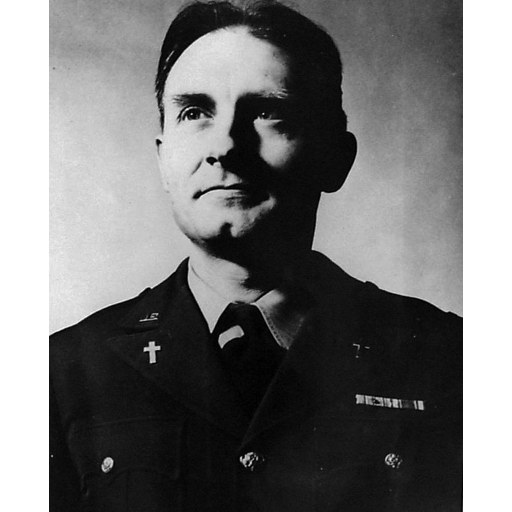
Unknown authorUnknown author
License: Public domain
Emil Kapaun
Venerable- Life Span
- 1916 - 1951 (age 35)
- Gender
- male
- Church
- Catholic
Places
Relics & Where to Venerate
Location unknown
The bodily remains of Emil Kapaun are a first-class relic. Venerated at Cathedral of the Immaculate Conception.
Roles & Family
Biography
Emil Joseph Kapaun was born on 20 April 1916 on a farm near the Czech-American Catholic settlement of Pilsen in Marion County, Kansas, the son of Enos Kapaun and Elizabeth Hajek Kapaun. He grew up in a rural household of Bohemian heritage, attending local schools and the parish of St. John Nepomucene. Sensing a vocation to the priesthood, he studied at Conception Seminary in Missouri and at Kenrick Theological Seminary in St. Louis. Bishop Christian Herman Winkelmann ordained him a priest of the Diocese of Wichita on 9 June 1940. In his first years of ministry he served Kansas parishes, including later as pastor of his home parish in Pilsen, combining ordinary diocesan pastoral work with the habits of a farm-raised priest who was used to hard physical labor.
During the Second World War he entered the United States Army Chaplain Corps, completed chaplain training, and was sent to the China-Burma-India Theater, where he ministered to American troops in the closing phase of the conflict. After demobilization he returned to Kansas and resumed parish assignments. In the late 1940s he went back on active duty as a chaplain, serving with occupation forces in Japan. When the Korean War began in 1950 he went to Korea with the 8th Cavalry Regiment of the 1st Cavalry Division. Fellow soldiers later described him as a chaplain who went forward with combat units, celebrated Mass under field conditions, and stayed close to enlisted men rather than remaining in rear areas.
In early November 1950, during the Battle of Unsan in North Korea, Chinese forces surrounded and overran elements of the 8th Cavalry. Kapaun remained with wounded men who could not be evacuated, giving last rites, carrying injured soldiers, and attempting to shield them as the position collapsed. He was captured and forced on a winter march northward toward camps along the Yalu River. Survivors testified that on the march and in captivity he encouraged the exhausted, shared food and clothing, and continued to act as a priest despite prohibitions on religious practice. At Prisoner of War Camp 5 near Pyoktong he organized clandestine prayer, improvised vessels and a pyx for the Eucharist, stole food for the starving, washed the filthy clothes of the sick, and openly resisted communist political indoctrination in the camp.
Weakened by dysentery, malnutrition, pneumonia, and a blood clot in his leg, he was taken to the camp’s so-called hospital, a squalid holding place for men expected to die, and died there on 23 May 1951. He was buried in a mass grave near the camp. After the armistice, unidentified remains from the Korean camps were returned and interred at the National Memorial Cemetery of the Pacific in Honolulu. In 2021 the Defense POW/MIA Accounting Agency identified Kapaun’s remains; they were reinterred on 29 September 2021 at the Cathedral of the Immaculate Conception in Wichita, Kansas. The United States awarded him the Medal of Honor posthumously in 2013. The Catholic Church named him a Servant of God, and the Diocese of Wichita opened a cause for beatification and canonization that was later sent to Rome. He has not been beatified or canonized, and he has no official feast day or approved patronages.