Enoch is a saint of the Catholic Church.
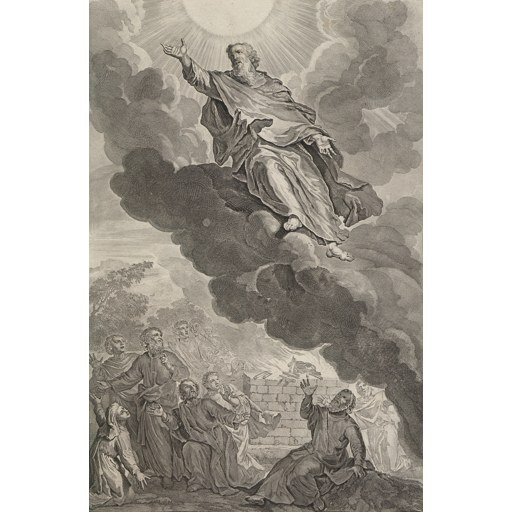
Gerard Hoet
License: Public domain
Enoch
Saint- Gender
- male
- Church
- Catholic
Relics & Where to Venerate
Location unknown
2 Enoch (aka Book of the Secrets of Enoch), preserved in Old Church Slavonic, and first translated in English by William Morfill – usually dated to the first century AD
Housed at Old Cathedral · Italy
2 Enoch (aka Book of the Secrets of Enoch), preserved in Old Church Slavonic, and first translated in English by William Morfill – usually dated to the first century AD
Roles & Family
Biography
Enoch is a figure of the Hebrew Bible, presented in the Book of Genesis as an antediluvian patriarch in the line from Adam to Noah. According to Genesis 5 he was the son of Jared and the father of Methuselah, lived three hundred and sixty-five years, and had other sons and daughters besides Methuselah. The same chapter states that Enoch “walked with God” and that “he was not, for God took him,” a phrasing that later Jewish and Christian readers took to mean that he did not die in the ordinary way but was taken by God. No historically verifiable year of birth or death, place of origin, or contemporary extra-biblical record exists for him; the narrative belongs to the primeval history of Genesis rather than to datable historiography, and later chronological schemes that assign him a precise year before the Common Era are theological constructions, not established historical dates.
The New Testament treats Enoch as an exemplar of faith. The Letter to the Hebrews (11:5) says that by faith he was taken up so that he did not see death, and that before he was taken he was attested as having pleased God. The Epistle of Jude (verses 14–15) quotes a prophecy ascribed to “Enoch, the seventh from Adam,” language related to the Enochic literature of the Second Temple period. In that literature, especially the composite work known as 1 Enoch (preserved in full in Ge‘ez in the Ethiopian tradition) and related texts such as 2 Enoch and 3 Enoch, he is elaborated as a visionary, heavenly scribe, recipient of cosmological and calendrical secrets, and in some strands an intercessor or a figure transformed into a heavenly being. These writings are generally dated by modern scholarship to the last centuries before the Common Era and the early centuries of the Common Era; they were influential in some Jewish circles and later in Christian apocalyptic thought, but they are not independent historical biographies.
Christian tradition, particularly in the East, has numbered Enoch among the righteous of the Old Covenant and commemorated him with the Holy Forefathers. Because Genesis and Hebrews describe him as taken by God rather than buried, there is no historically attested tomb. In Islam the Quranic prophet Idris is commonly identified with Enoch and is described as a man of truth and a prophet raised to a high station. Medieval Jewish, Christian, and Islamic authors continued to associate him with writing, wisdom, and astronomy. None of these developments supplies a verifiable civil biography: his wife is unnamed in Genesis (later texts such as Jubilees give names that are not historically confirmed), he held no ecclesiastical office of pope or patriarch in the later sense of those titles, and he was not the subject of a formal papal canonization. What can be stated with confidence is the content of the canonical and extra-canonical texts that mention him and the long history of religious interpretation those texts have generated.