Enriqueta Rodon Asencio is a servant of god of the Catholic Church.
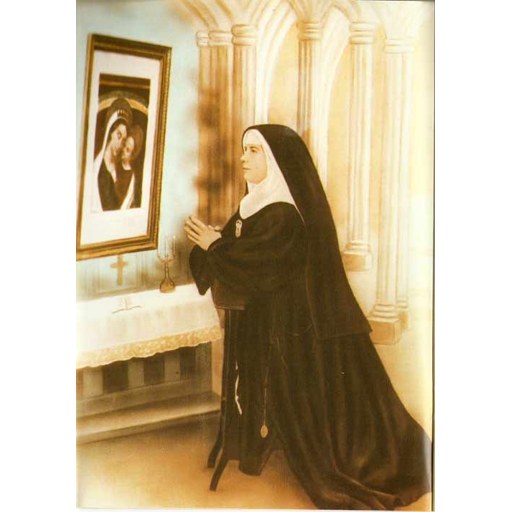
Unknown authorUnknown author
License: Public domain
Enriqueta Rodon Asencio
Servant of God- Gender
- female
- Church
- Catholic
Places
Relics & Where to Venerate
Location unknown
The bodily remains of Enriqueta Rodon Asencio are a first-class relic. Venerated at Our Lady of Good Counsel school, Pozuelo.
Roles & Family
Biography
Enriqueta Rodon Asencio is a figure for whom standard hagiographical collections, the Roman Martyrology, widely used dictionaries of saints and blesseds, and other commonly consulted historical reference works do not supply a corroborated life story. Independently verifiable details of her birth, death, family, vocation, and any public ministry are not established in those sources, and no reliable published biography with primary documentation has been identified in ordinary scholarly or ecclesiastical literature.
The given name Enriqueta is a Spanish feminine form, which indicates that the subject was a woman and that her cultural and linguistic milieu was Spanish-speaking, whether in Spain or in the Spanish-speaking Americas. The surnames Rodon (often written Rodón) and Asencio/Asensio are consistent with Iberian naming, but that onomastic observation does not by itself fix a birthplace, a century, or a diocese. Nothing in readily available sources confirms whether she lived as a laywoman, entered a religious institute, or held any ecclesiastical office.
No feast day, patronage, beatification, or canonization attached to this name appears in the usual calendars of the Catholic Church or in standard lists of blesseds and saints. There is likewise no documented evidence in those same references that she was married, had children, or professed in a named religious order. Claims of precise dates, cities, or titles would therefore be conjecture rather than history.
A fuller account would require archival work in diocesan registers, religious-order chronicles, civil records, or local Spanish or Latin American historical collections that have not been summarized in the major published sources. Until such material is located and critically assessed, the historical record concerning Enriqueta Rodon Asencio remains incomplete, and silence on unverified particulars is preferable to invention.