Ephraim of Nea Makri is a saint of the Eastern Orthodox Church (1384 - 1426). Ephraim of Nea Makri's feast day is celebrated on 5 May and 3 January. Ephraim of Nea Makri is the patron saint of Nea Makri;the sick;those suffering from cancer;those struggling with addiction;those suffering from mental illness.
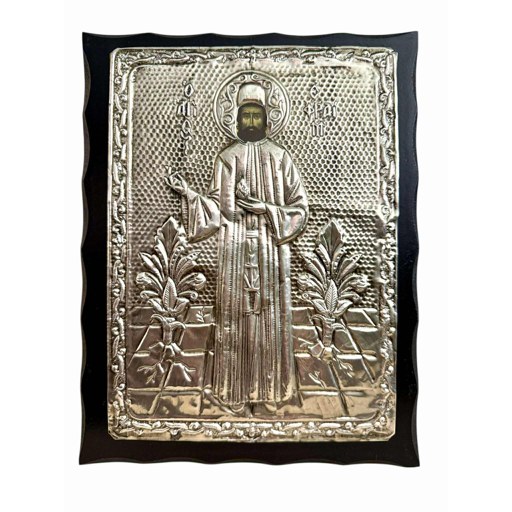
https://amazon.com/Makarios-Decor/s?k=Makarios+Decor
License: unknown
Ephraim of Nea Makri
Saint- Life Span
- 1384 - 1426 (age 42)
- Feast Day
- 5 May and 3 January
- Gender
- male
- Church
- Eastern Orthodox
Places
Roles & Family
Patronage
Nea Makri;the sick;those suffering from cancer;those struggling with addiction;those suffering from mental illness
Biography
Saint Ephraim of Nea Makri, also known as Ephraim of Mount Amomon, Ephraim the Neomartyr, and Ephraim the Newly Revealed, is a saint of the Eastern Orthodox Church. Nearly all that is related of his earthly life comes from visions and revelations reported in the mid-twentieth century by the nun Makaria Desypri, not from contemporary chronicles or archives. According to that tradition he was born in 1384 in Trikala in Thessaly and baptized Constantine; some accounts give the family name Morfis. At about the age of fourteen he entered the Monastery of the Annunciation of the Theotokos on Mount Amomon in Attica, near present-day Nea Makri, and was tonsured with the name Ephraim.
The received vita states that around 1416 Ottoman raiders destroyed the monastery and slaughtered the monks. Ephraim, having been absent or having escaped, returned and lived as a hermit among the ruins. On 14 September 1425 he was captured, then imprisoned and tortured for some eight months. On 5 May 1426 he was hanged upside down from a mulberry tree and killed by further torments, including a burning stake driven into his body. These particulars are not confirmed by fifteenth-century sources. In the 1420s Attica still formed part of the Latin Duchy of Athens, although Turkish raids in Greek lands in that era are historically attested. No independent medieval document names a monk Ephraim of Mount Amomon.
On 3 January 1950, while restoring the abandoned site, Makaria Desypri uncovered a grave containing human remains. Through dreams and visions she identified them as the relics of the previously unknown monk and martyr Ephraim and received the outline of his life and passion. The relics were enshrined at the restored Monastery of the Annunciation, which developed into a convent and a major Greek pilgrimage centre. From the 1950s onward numerous miracles, especially healings from cancer, other serious illnesses, mental affliction, and addiction, were attributed to his intercession. Makaria, who became abbess of the community, died in 1999. The monastery remains the place of his burial and the heart of his cult.
Orthodox Christians commemorate Saint Ephraim on 5 May, the traditional date of his martyrdom, and on 3 January, the date of the finding of his relics. His glorification took place within the Orthodox Church through popular veneration, the blessing of his icons and liturgical services, and synodal recognition, rather than through a Roman-style canonization process. He is widely invoked as a wonderworker and healer and is closely associated with Nea Makri and with those who suffer in body or mind.