Epiphania of Pavia is a saint of the Catholic Church (d. 800). Epiphania of Pavia's feast day is celebrated on 6 October.
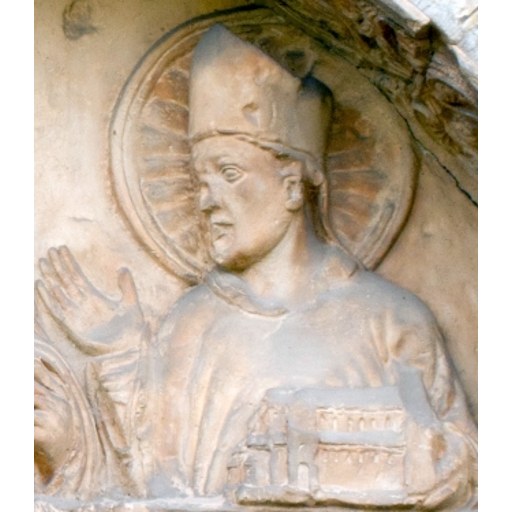
https://catholicsaints.info/saint-epiphanius-of-pavia
License: unknown
Epiphania of Pavia
Saint- Life Span
- d. 800
- Feast Day
- 6 October
- Gender
- female
- Church
- Catholic
Places
Relics & Where to Venerate
Location unknown
The bodily remains of Epiphania of Pavia are a first-class relic. Venerated at Santa Maria delle Cacce.
Roles & Family
Biography
Epiphania of Pavia, known in Italian as Santa Epifania, was an eighth-century Lombard princess who became a nun and was later venerated as a saint, especially in Pavia, the former capital of the Lombard kingdom. She is identified in later tradition as a daughter of Ratchis (also spelled Rachis), King of the Lombards, and of his wife Tassia (also rendered Tasia). Ratchis, who had previously been Duke of Friuli, occupied the Lombard throne from 744 until his abdication in 749. Pavia was the royal seat, but because no source records the year of Epiphania's birth, it is not possible to say with certainty whether she was born in Friuli during her father's ducal years or in Pavia after he became king. No reliable authority supplies a birth year, and none should be inferred from the dates of his reign.
The event that shaped her life was the abdication of 749. Under pressure from factions among the Lombard nobility and amid papal diplomacy associated with Pope Zachary, Ratchis laid aside the crown. Period accounts state that he went to Rome with his wife and children and then entered the monastery of Monte Cassino. Pavian tradition holds that Epiphania took the veil and lived as a nun at the monastery of Santa Maria Teodote in Pavia, a house also known as Santa Maria della Pusterla and one of the female religious communities of the Lombard capital. After the death of Ratchis's brother and successor Aistulf in 756, the former king briefly left monastic retirement in an attempt to recover the throne, but he was opposed by Desiderius and returned to the cloister. Epiphania's own career, so far as it can be reconstructed, remained that of a consecrated woman rather than a figure at court.
By the time of her death the independent Lombard kingdom had ceased to exist. Charlemagne conquered the realm in 774, and northern Italy passed under Carolingian rule. Local tradition places Epiphania's death at Pavia around the year 800. The historical record for her personally is thin. She does not occupy a significant place in the principal narrative sources for Lombard history, and no substantial medieval biography of her is known to survive. What later generations in Pavia preserved was the memory of a royal daughter who had embraced monastic life and died in holiness at the turn of the ninth century. Her liturgical commemoration has been observed on 6 October in some local calendars.
Because the evidence is so limited, a cautious account must distinguish between the well-documented public history of her family and the much more fragile hagiographical notices that concern Epiphania herself. Her parentage, the abdication of 749, the family's turn to monasticism, and the association with Pavia form the core of what can be stated. Precise claims about her birthplace, the monastic rule followed in her community in the eighth century, the exact day of her death, and the site of her burial rest on later tradition rather than on contemporary testimony. She remains an obscure saint whose cult was essentially local, a reminder of the last generation of the Lombard royal house and of the religious choices made by that family as their kingdom approached its end.