Erconwald is a saint of the Catholic Church (d. 693). Erconwald's feast day is celebrated on 30 April. Erconwald is the patron saint of London.
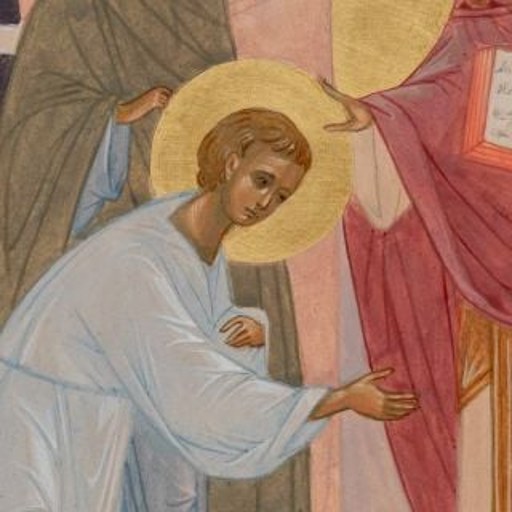
https://catalog.obitel-minsk.com/icons-prav/painted-icons.html
License: unknown
Erconwald
Saint- Life Span
- d. 693
- Feast Day
- 30 April
- Gender
- male
- Church
- Catholic
Places
Roles & Family
Religious Information
Patronage
London
Canonization
Biography
Saint Erconwald (also Erkenwald or Eorcenwald) was a seventh-century Anglo-Saxon abbot and bishop of London, one of the principal holy figures of the early English church in the Thames valley and among the East Saxons. Almost nothing certain is known of his birth or childhood. He came of a noble family; later medieval writers linked him to East Saxon or other royal kindred, but those genealogies are not securely grounded in contemporary evidence. His sister, Saint Æthelburh (Ethelburga), became the first abbess of Barking. The chief near-contemporary witness is the Venerable Bede, who in the early eighth century recorded Erconwald’s monasteries, his episcopate, and the reputation for holiness that already surrounded him.
In the mid-seventh century Erconwald founded two monasteries that anchored Christian life on either side of the lower Thames. Chertsey, in Surrey, he established for himself and a community of monks, receiving land from Frithuwold, a sub-king of Surrey under Mercian overlordship, in a grant belonging to the 660s or early 670s. Barking, in Essex, he founded for Æthelburh and a community of nuns; it became one of the leading women’s houses of conversion-era England. These foundations made him a central monastic patron in the kingdoms of the East Saxons and their neighbours. Around 675 Archbishop Theodore of Canterbury consecrated him bishop of the East Saxons, with his see at London, in succession to Wine. He remained bishop until his death.
Bede describes Erconwald as a man of outstanding sanctity. When infirmity (later tradition speaks of gout or lameness) prevented him from walking, he was carried about his diocese in a horse-litter. Splinters taken from that litter were already in Bede’s day believed to heal the sick, a sign that a cult had begun around the living bishop. He died in 693, according to the received chronology of the London episcopal succession; later hagiography places the death at Barking Abbey on 30 April, while he was visiting his sister’s house. He was buried in St Paul’s Cathedral in London. In the twelfth century his relics were translated to a more splendid shrine, and his cult, with a principal feast on 30 April and a feast of the translation in November, remained at the centre of the liturgical life of St Paul’s until the shrine was destroyed at the Reformation.
Erconwald’s historical importance lies in the consolidation of Christianity in London and Essex after earlier reverses in the conversion of the East Saxons, and in the close bond he created between the London bishopric and the new monasteries of Chertsey and Barking. His sister Æthelburh and the Barking community, whom Bede also commemorates in connection with plague and visions, belong to the same religious network. Twelfth-century collections of miracles associated with his London shrine cannot be verified from seventh-century sources, but the outline of his abbacies, his consecration under Theodore, his long episcopate, and his burial at St Paul’s rests on Bede and on the documentary and liturgical memory of the English church. He was venerated as a saint by popular cult and local liturgical observance rather than by a later papal canonization, as was usual for holy bishops of his age.