Erukhan is a saint of the Catholic Church (1870 - 1915).
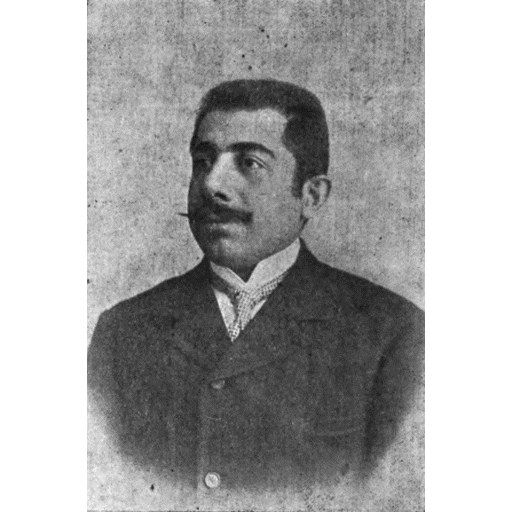
Teodik's Amenuyn Daretsuyts (1910)
License: Public domain
Erukhan
Saint- Life Span
- 1870 - 1915 (age 45)
- Gender
- male
- Church
- Catholic
Places
Roles & Family
Biography
Erukhan was the pen name of Yervand Srmakeshkhanlian, a Western Armenian writer, teacher, and journalist of the late Ottoman period. He was born in 1870 in Constantinople, in the Samatya district, a historic quarter of the imperial capital with a large Armenian population. He was educated in the Armenian schools of the city, including the Getronagan Armenian High School, which trained many members of the Constantinople Armenian intelligentsia. After completing his studies he worked as a teacher in Armenian community schools and wrote for the Armenian-language press that flourished in the capital and among Ottoman Armenian communities in the decades before the First World War.
He belonged to the realist current in Western Armenian literature. In an era when Armenian letters in the Ottoman Empire still often turned to historical romance, didactic nationalism, or the language of the Church, Erukhan and his contemporaries sought to depict contemporary social conditions with fewer idealizations. His fiction and sketches treated the lives of ordinary Armenians—artisans, the urban poor, provincial families, and the tensions of household and neighborhood life under Ottoman rule. His work appeared in periodicals read by the Armenian millet and formed part of the same literary milieu as other Constantinople realists of the late nineteenth and early twentieth centuries.
The Armenian community of Constantinople in those years maintained newspapers, schools, and literary societies under the millet system, with a brief widening of public life after the Young Turk Revolution of 1908. That world was destroyed in 1915. Following the Ottoman government’s arrest of Armenian intellectuals, clergy, and community leaders in Constantinople beginning on 24 April 1915, Erukhan was detained, deported from the capital into the interior of Anatolia, and killed in the Armenian Genocide. Standard historical accounts record his death in 1915; the precise place and circumstances of his murder are not established with the same certainty as his arrest and year of death, and he is counted among the murdered writers of that year.
Erukhan is remembered in Armenian literary history as a voice of Western Armenian realism whose career was cut short by the genocide, and as one of the Constantinople intellectuals who perished in 1915. His writings belong to the body of literature produced by the Ottoman Armenian urban community in the generation before its destruction. Later commemorations of the literary victims of 1915 include him among the authors whose work documents a vanished social world.