Euphrasia of Constantinople is a saint of the Catholic Church. Euphrasia of Constantinople's feast day is celebrated on 13 March (Catholic); 25 July (Orthodox).
Uncertain
License: Public domain
Euphrasia of Constantinople
Saint- Feast Day
- 13 March (Catholic); 25 July (Orthodox)
- Gender
- female
- Church
- Catholic
Places
Roles & Family
Biography
Saint Euphrasia of Constantinople, known in Greek hagiography as Eupraxia, was a monastic virgin of the late fourth and early fifth centuries. Her ancient Life presents her as the daughter of Antigonus, a senator of Constantinople and a kinsman of the emperor Theodosius I, and of a mother who likewise bore the name Euphrasia or Eupraxia. Born in the imperial capital into great wealth and rank, she was still a small child when her father died. The emperor, as a relative, took the family under his protection and arranged a betrothal between the girl and the son of a prominent noble, the marriage to be concluded when she came of age. Her widowed mother, wishing to withdraw from court life, obtained permission to leave Constantinople with her daughter, ostensibly to look after estates in Egypt.
In the Thebaid they visited a large monastery of nuns, conventionally described as numbering one hundred and thirty. The child, then about seven years old, was strongly drawn to the community and asked to remain and to take the monastic habit as a bride of Christ. The abbess, after testing her intention, received her. The mother died not long afterward, having written to the emperor to request that her daughter be released from the betrothal and that the family property be given to the poor and to the churches. When, some years later, imperial letters summoned Euphrasia back to Constantinople to fulfill the marriage contract, she refused. In her reply she asked that her fortune be distributed in alms and that her slaves be manumitted. According to the Life, the emperor granted these requests and did not compel her return.
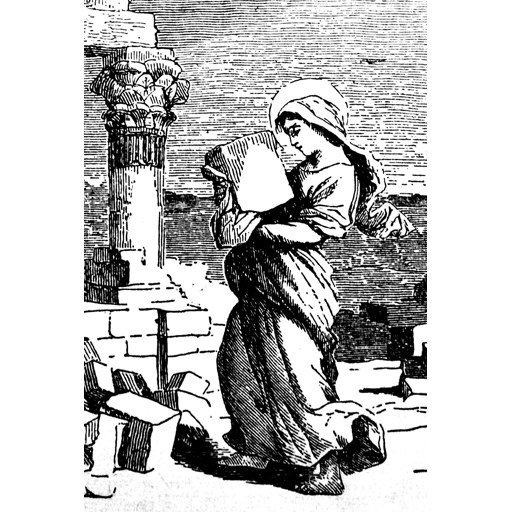
Euphrasia spent the remainder of her life in the Egyptian community. The hagiographical tradition emphasizes an asceticism of hiddenness and hard labor rather than of public teaching. She is said to have sought the most menial offices of the monastery—carrying stones, cutting wood, working in the bakery, and cleaning—and to have accepted repetitive, humiliating tasks assigned to break pride and to combat temptation, including the moving of a great pile of stones from one place to another. The Life attributes to her struggles against anger and demonic suggestion, patience under insult, and, in time, a reputation among the sisters for holiness and for certain healings. She died in the same monastery in the Thebaid while still a young woman; the tradition that she was about thirty years old at death is part of the same narrative cycle and is not confirmed by independent documentary evidence.
Veneration of Euphrasia is early. The Roman Martyrology records her on 13 March, identifying her as a virgin of the Thebaid. In the Byzantine calendar she is commonly commemorated on 25 July under the name Eupraxia. The chief source remains the Greek Life, with Latin recensions, a text that belongs to the literature of the desert and that combines plausible social detail—senatorial family, imperial kinship, Egyptian estates, a large coenobitic house of nuns—with the conventional motifs of child oblation, refused marriage, and victorious ascesis. She was never the subject of a later papal canonization process; her status as a saint rests on this ancient cult. No historically secure list of patronages is attached to her name, and the precise years of her birth and death cannot be verified outside the traditional reconstruction that places them around the last years of Theodosius I and the opening of the fifth century.