Euphronios of Autun is a saint of the Catholic Church. Euphronios of Autun's feast day is celebrated on August 3.
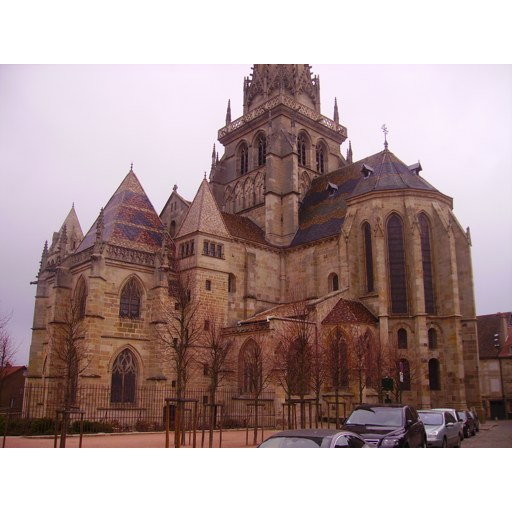
Zairon
License: CC BY-SA 3.0
Euphronios of Autun
Saint- Feast Day
- August 3
- Gender
- male
- Church
- Catholic
Places
Roles & Family
Biography
Euphronius of Autun (also rendered Euphronios, and in French as Saint Euphrone d’Autun) was a bishop of the Gallo-Roman city of Autun (ancient Augustodunum) in central Gaul during the later fifth century. Nothing reliable is known of his birth, family, education, or early career; he enters the historical record only as an already-established bishop. Autun, once the principal city of the Aedui and still an important ecclesiastical centre, had a Christian community going back at least to the third century and a line of bishops that included Reticius, who attended the Council of Arles in 314. Euphronius belonged to the generation of Gallic prelates who governed their churches as imperial administration in the West collapsed and as Burgundian power spread through the Saône and Rhône valleys. The chief contemporary witness to him is Sidonius Apollinaris, the poet-bishop of Clermont; in the sixth century Gregory of Tours, writing in the same region, preserved several notices of Euphronius’s deeds in connection with churches and the cult of the saints.
Sidonius’s correspondence shows Euphronius as one of the more respected bishops of central Gaul around 470. When the metropolitan see of Bourges fell vacant, Sidonius consulted him, together with other senior colleagues, about the choice of a successor; the man eventually consecrated was Simplicius. The episode illustrates both Euphronius’s standing among his peers and the still relatively collegial way in which Gallic bishops filled vacant sees in the last decades of Roman rule. No sermons, letters, or other writings by Euphronius himself survive, so his personality and theological views cannot be recovered. What can be said is that he exercised the ordinary functions of a fifth-century urban bishop: oversight of clergy and people, participation in the wider Gallic episcopal network, and patronage of local cults.
Gregory of Tours attributes to him two concrete acts of architectural and cultic patronage. At Autun he built, or completed, a basilica in honour of the local martyr Saint Symphorian, giving monumental form to one of the city’s oldest Christian memories. Gregory also records that when Bishop Perpetuus of Tours enlarged the shrine of Saint Martin, Euphronius sent from Autun a marble covering for Martin’s tomb. The gift, costly in a period of economic contraction, points both to Autun’s remaining resources and to the ties of episcopal solidarity that still bound the churches of Gaul together. These brief notices are typical of how fifth-century Gallic bishops are remembered: not through personal biography but as builders, relic-custodians, and correspondents.
The year of Euphronius’s death is not known with precision. He was certainly still in office after about 470. Later martyrologies and episcopal lists have traditionally placed his death in the later fifth century, often around 475, though some notices suggest a date closer to 490; neither figure can be treated as exact. He was honoured at Autun as a saint, and the Roman Martyrology commemorates him on 3 August. No medieval vita of any length is known, and his cult remained essentially local. His historical profile is therefore that of a well-attested but sparsely documented bishop of the last phase of Roman Gaul, whose memory was preserved by Sidonius, by Gregory of Tours, and by the liturgical tradition of Autun rather than by any connected narrative of his life.