Eupsychius is a saint of the Catholic Church (d. 362). Eupsychius's feast day is celebrated on April 9.
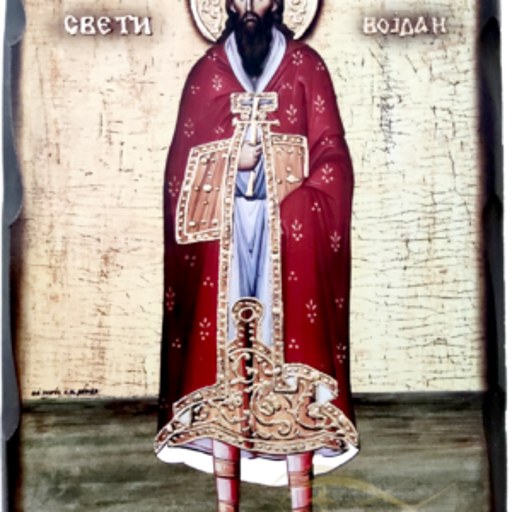
https://artstudioikona.com/shop/icons/saints/saint-eustathius/
License: unknown
Eupsychius
Saint- Life Span
- d. 362
- Feast Day
- April 9
- Gender
- male
- Church
- Catholic
Places
Roles & Family
Biography
Eupsychius of Caesarea was a Christian martyr of the mid-fourth century, associated with Caesarea in Cappadocia (modern Kayseri). Later Greek synaxaria describe him as a young man of distinguished, even senatorial, family and a native of that city. His historical footprint is unusually clear for a local martyr of this period. Within roughly a decade of the events linked to his death, Basil the Great, bishop of Caesarea, repeatedly invited neighboring bishops to the annual commemoration of the martyr Eupsychius and referred to a martyrium in the city dedicated to him. The cult is therefore attested in contemporary episcopal correspondence, not only in later liturgical books. The name Eupsychius, from Greek roots meaning of good courage or good-souled, matches the character given him in subsequent hagiographical notices.
The setting of his martyrdom is the short reign of the emperor Julian (361-363), called the Apostate by Christian authors because he had abandoned Christianity and attempted to restore traditional pagan cults. Julian traveled through Asia Minor toward Antioch and the Persian frontier in 362. Church historians writing in the following generations, especially Sozomen, record that the Christians of Caesarea had destroyed a temple of Fortune (Tyche) and that Julian punished the city with exceptional severity. He is said to have stripped Caesarea of its civic status, imposed a crushing financial penalty, and forced members of the clergy onto the city council so that they would bear the cost of rebuilding. Hagiographical tradition identifies Eupsychius as one of those who took part in the demolition of the pagan shrine, or as a leading Christian who would not cooperate with the imperial order to restore it.
Later synaxarion accounts add that Eupsychius had only recently been married when he was seized. He is reported to have been tortured and then beheaded, customarily in the year 362. No contemporary passion narrative survives, and the precise course of any trial is unknown. What can be affirmed with greater confidence is that a martyr of this name was already publicly venerated at Caesarea in Basil's lifetime, that bishops were expected to gather for his feast, and that Julian's humiliation of the city remained a living memory among Cappadocian Christians. After Julian died in 363, the civic penalties against Caesarea were lifted, but the cult of Eupsychius continued.
He is commemorated on 9 April in the Byzantine liturgical calendar and in the Roman Martyrology, which names him as a martyr who suffered at Caesarea in Cappadocia under Julian for overthrowing the temple of Fortune. Tradition presents him as a layman, not as a bishop, monk, or member of a religious order. No reliable ancient source preserves the name of his wife or records that he had children. A specific burial site beyond the martyrium at Caesarea mentioned by Basil is not identified in surviving texts. He was never the object of a formal papal canonization of the later medieval or modern kind; his honor belongs to the ancient, pre-congregational veneration of the martyrs. He held neither the papacy nor a patriarchal see.
Beyond these points, little can be verified. Standard hagiographical reference works do not attach to him a developed list of patronages of places, trades, or causes. The combination of a firmly documented fourth-century cult with a relatively thin narrative of the passion is characteristic of many local martyrs of the late Roman East, whose memory was kept first in the liturgy and in the letters of their bishops rather than in a contemporary written passio.