Eusebio Kino is a venerable of the Catholic Church (1645 - 1711).
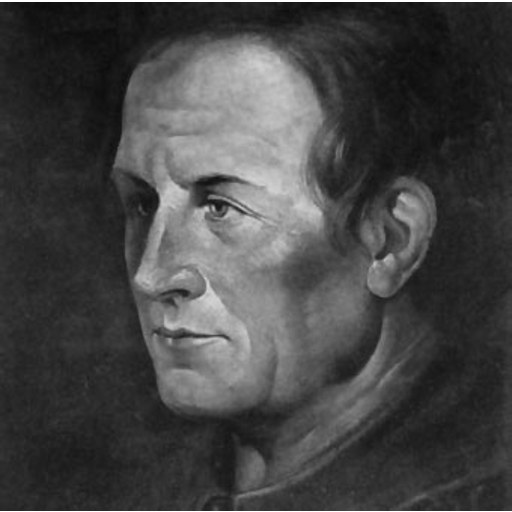
Unknown authorUnknown author
License: Public domain
Eusebio Kino
Venerable- Life Span
- 1645 - 1711 (age 66)
- Gender
- male
- Church
- Catholic
Places
Relics & Where to Venerate
Location unknown
The bodily remains of Eusebio Kino are a first-class relic. Venerated at Magdalena de Kino.
Roles & Family
Religious Information
Biography
Eusebio Francisco Kino was born Eusebio Chini on 10 August 1645 in the village of Segno in the Val di Non, then within the Prince-Bishopric of Trent in the Holy Roman Empire (now in Trentino, Italy). After a serious illness in his youth, he entered the Society of Jesus in 1665. He took the additional name Francisco in honor of Saint Francis Xavier, to whom he attributed his recovery and whom he hoped to follow as a missionary in Asia. He received a rigorous Jesuit education in the German-speaking lands, distinguishing himself in mathematics, astronomy, and cartography, and for a time taught at the University of Ingolstadt. Although he repeatedly sought assignment to the missions of China or the Philippines, his superiors sent him instead to the Spanish Americas.
Kino reached New Spain in 1681. He first served as royal cosmographer on an expedition to the California peninsula and helped found the short-lived mission of San Bruno in Baja California in 1683. After that venture was abandoned, he was assigned in 1687 to the Pimería Alta, the northern frontier of Sonora covering present-day northern Sonora and southern Arizona. He established his headquarters at Nuestra Señora de los Dolores and spent the remaining twenty-four years of his life among the O'odham (Pima) and neighboring peoples. He founded or revitalized a chain of missions that included San Ignacio, Imuris, Magdalena, San Xavier del Bac, Tumacácori, Guevavi, and others, introducing European livestock, wheat, and fruit trees while mapping large stretches of previously poorly known country.
A skilled explorer and cartographer, Kino made more than fifty overland expeditions and traveled thousands of miles on horseback. His journeys showed that Baja California was a peninsula rather than an island, a finding of lasting geographic importance. He produced maps that remained authoritative for generations and recorded careful observations of the land, its peoples, and the heavens. He also became an advocate for the Indigenous communities under his care, intervening against forced labor in the mines and arguing for their rights before colonial authorities. His combination of missionary work, scientific competence, and practical ranching reshaped the economy and settlement pattern of the region.
Kino died on 15 March 1711 at the mission of Santa María Magdalena, where he had gone to dedicate a chapel to Saint Francis Xavier, and was buried there. Long venerated locally in Sonora and Arizona, he was declared Venerable by Pope Francis in 2020 after a decree of heroic virtues. His remains, identified in 1966, rest in a crypt in the plaza of Magdalena de Kino, Sonora. Missions associated with him, notably San Xavier del Bac near Tucson, remain active, and he is remembered as a principal figure in the early history of the American Southwest and northwestern Mexico.