Eusebius is a saint of the Catholic Church (d. 462). Eusebius's feast day is celebrated on 12 August.
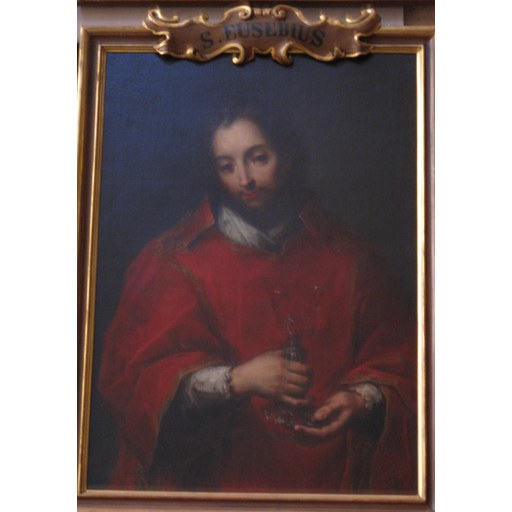
A ntv
License: CC BY-SA 3.0
Eusebius
Saint- Life Span
- d. 462
- Feast Day
- 12 August
- Gender
- male
- Church
- Catholic
Places
Roles & Family
Biography
Eusebius was bishop of Milan in the mid-fifth century, occupying the see from 449 until his death in 462. Ancient episcopal catalogues and later martyrologies identify him as a Greek by birth who came to exercise the episcopate in northern Italy. No contemporary source records the year or precise place of his birth, nor the circumstances that brought him from the Greek-speaking East to Milan. He succeeded Bishop Lazarus and was in turn succeeded by Gerontius, according to the traditional list of the bishops of Milan.
His years as bishop coincided with the collapse of imperial authority in the Western Roman Empire. In 452 the Huns under Attila invaded Italy and sacked Milan, an event that would have confronted any bishop of the city with pastoral and material ruin, though no detailed account of Eusebius’s own actions during the invasion survives. Throughout this period he remained in communication with Pope Leo I. A synod associated with Milan in 451 accepted the Tome of Leo and condemned the teaching of Eutyches, thereby aligning the church of Milan with Rome on the eve of the Council of Chalcedon.
Beyond these doctrinal alignments, the surviving record of Eusebius’s episcopate is sparse. No sermons, treatises, or extensive correspondence of his own have been preserved. He is not associated with a monastic rule or religious order. Information about his family life, whether he had been married before ordination, or whether he had children is entirely lacking in the sources.
Eusebius died in 462, presumably in Milan. His cult is of long standing. The Roman Martyrology commemorates him on 12 August as a bishop of Greek origin who governed the church in Italy. He is venerated as a saint in the Catholic Church; no record exists of a formal papal canonization, his cult belonging to the period before the regularization of canonization procedures. Specific patronages are not attributed to him in standard hagiographical lists, and the location of his burial is not securely documented in the sources that survive.