Euthymius of Sardis is a saint of the Pre-Schism (Universal) Church (751 - 831). Euthymius of Sardis's feast day is celebrated on 26 December.
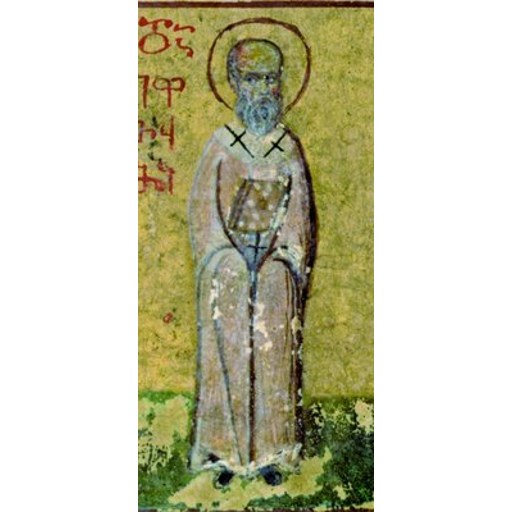
Unknown authorUnknown author
License: Public domain
Euthymius of Sardis
Saint- Life Span
- 751 - 831 (age 80)
- Feast Day
- 26 December
- Gender
- male
- Church
- Pre-Schism (Universal)
Places
Roles & Family
Biography
Euthymius of Sardis was a ninth-century Byzantine metropolitan bishop and one of the principal episcopal opponents of the second period of Iconoclasm. He was born in 751 in the village of Ouzara in Lycaonia, in central Asia Minor. He entered the monastic life and about 785 was appointed metropolitan of Sardis, an ancient see in Lydia in western Asia Minor. In that capacity he took part in the Second Council of Nicaea in 787, which condemned iconoclasm and restored the public veneration of icons. He thus belonged to the generation of churchmen formed after the first restoration of images, who later suffered when imperial policy turned against icons once more.
His tenure at Sardis ended under Emperor Nikephoros I, who deposed him from the metropolitan see around 803 or 804. The Life of Euthymius composed by Methodius, later patriarch of Constantinople, presents the deposition as the result of Euthymius’s refusal to consent to measures he regarded as uncanonical. From that time he lived in exile and confinement, a condition that continued through the following reigns. When Leo V the Armenian moved in 814–815 to restore iconoclasm, Euthymius was among the leading iconophile bishops who refused to accept the prohibition of icons. Together with Theodore the Studite and other clergy, he resisted the emperor’s ecclesiastical policy and was again imprisoned and sent into exile.
Michael II, who came to the throne in 820, adopted a milder official line but did not restore icons, and Euthymius remained excluded from his see. After Theophilos became emperor in 829, pressure on prominent iconophiles increased. In 831 Euthymius, then about eighty years old, was brought before Theophilos and personally interrogated. When he would not abandon the veneration of icons or enter communion with the iconoclast hierarchy, he was stripped and flogged with ox-hide thongs. He died of his injuries on 26 December 831 on the island of Saint Andrew in the Sea of Marmara. Because he died under torture for his confession of the faith, the Eastern Orthodox Church honors him as a hieromartyr.
The principal narrative of his life is the hagiography written by Methodius, who had himself been imprisoned for supporting icons and who in 843, as patriarch, presided over the restoration of icon veneration known as the Triumph of Orthodoxy. Euthymius is commemorated on 26 December in the synaxaria of the Eastern Orthodox Church. He was recognized as a saint in the Byzantine liturgical tradition rather than by a later Latin process of canonization, and the principal historical sources do not record a distinct set of specialized patronages attached to his name.