Eutizio and Fiorenzo is a saint of the Catholic Church. Eutizio and Fiorenzo's feast day is celebrated on 23 May. Eutizio and Fiorenzo is the patron saint of Preci.
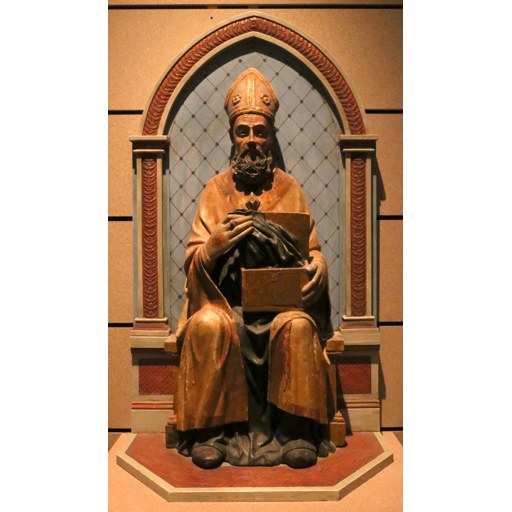
Sailko
License: CC BY 3.0
Eutizio and Fiorenzo
Saint- Feast Day
- 23 May
- Gender
- male
- Church
- Catholic
Places
Roles & Family
Patronage
Preci
Biography
Saints Eutizio (Latin Eutychius) and Fiorenzo (Latin Florentius) were monks of the sixth century in the mountains of Nursia, the district of present-day Norcia in Umbria. Nearly all that can be affirmed of them with historical caution comes from a single chapter of Pope Gregory the Great’s Dialogues (Book III, chapter 15), written in the 590s. Gregory, drawing on monastic memory still living in his own generation, presents Eutizio as abbot of a community in the Val Castoriana and Fiorenzo as a hermit living nearby. Later tradition identifies that community with the Abbey of Sant'Eutizio near Preci, which in the Middle Ages became an important Benedictine house, known for its library and for a tradition of monastic medicine. Gregory gives no birthplaces, no years of birth, and no precise years of death; later martyrologies place Eutizio’s death in the mid-sixth century and keep his feast on 23 May.
Gregory describes two complementary ways of life. Eutizio the abbot often left the monastery to preach and to convert the people of the surrounding countryside. Fiorenzo remained in solitude, occupied with prayer and with a small flock of sheep. Lacking a human helper, the hermit prayed for assistance; a bear came from the woods and thereafter served him, leading the sheep to pasture and bringing them home at his signal. The marvel, Gregory says, stirred the envy of certain monks of Eutizio’s monastery, who killed the animal. When Fiorenzo found the bear dead he called on God that the killers might be punished in this life rather than the next. They were then stricken with a wasting disease of the skin and died. Fiorenzo, horrified that his words had taken effect, spent the rest of his days in tears and regarded himself as guilty of their deaths. Gregory dwells on the episode as a warning about anger even in a holy man and as a portrait of lifelong repentance.
Eutizio died before Fiorenzo. Gregory records the abbot’s reputation for holiness and the honor paid to his memory after death; he does not assign a calendar date. Fiorenzo outlived him and ended his life in the same hermitage. Medieval writers, going beyond the Dialogues, sometimes claimed that the early monks of the Val Castoriana were refugees from the East, often from Syria, who had fled doctrinal conflict and planted monastic life in Umbria. That origin story, common for several Italian saints of the period, is not in Gregory and cannot be verified. The same later sources name an earlier abbot, Spes (mentioned by Gregory in another context), as Eutizio’s predecessor at the Castorian monastery.
The cult of Eutizio and Fiorenzo is ancient and of the pre-congregation type. They were venerated locally long before the later canonical processes of beatification and canonization, and no papal act of canonization in the modern sense is recorded. Relics associated with Eutizio have been kept at the Abbey of Sant'Eutizio in Preci, which takes its name from the abbot and remains the centre of their memory. Eutizio is the patron saint of Preci. Their story, as told by Gregory and retold by medieval monastic authors, has been read as an illustration of two classic monastic vocations—the preaching cenobite and the silent hermit—lived side by side in the same remote Apennine valley that also produced Saint Benedict of Nursia.