Eutychius of Constantinople is a saint of the Catholic Church (512 - 582). Eutychius of Constantinople's feast day is celebrated on 6 April.
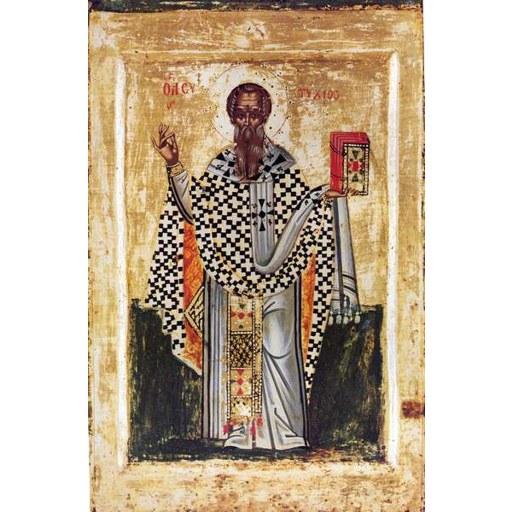
AnonymousUnknown author
License: Public domain
Eutychius of Constantinople
Saint- Life Span
- 512 - 582 (age 70)
- Feast Day
- 6 April
- Gender
- male
- Church
- Catholic
Places
Roles & Family
Biography
Eutychius of Constantinople was a sixth-century patriarch of the imperial capital and is venerated as a saint in the Eastern Orthodox Church and in the Catholic Church. He was born in the village of Theium in Phrygia, in Asia Minor, in the early sixth century, a date conventionally given as 512. His father, Alexander, served as an officer under the Byzantine general Belisarius. Eutychius entered monastic life at Amasea in Pontus, where he was ordained to the priesthood and in time became archimandrite of a monastery. He acquired a reputation for learning, asceticism, and theological competence within the Greek-speaking church of the age of Justinian. The principal narrative of his life is the contemporary biography written by his chaplain Eustathius, which later liturgical and encyclopedic accounts follow, supplemented by conciliar acts and papal correspondence.
In 552, while in Constantinople on ecclesiastical business as a representative of the church of Amasea, Eutychius was chosen by Emperor Justinian I to succeed Patriarch Menas. He was consecrated patriarch of Constantinople that same year. In 553 he took a leading role in the Second Council of Constantinople, the Fifth Ecumenical Council, which condemned the Three Chapters—the person and writings of Theodore of Mopsuestia, certain writings of Theodoret of Cyrrhus, and the letter of Ibas of Edessa to Mari—and also addressed Origenist doctrines. The council was closely bound to Justinian's religious policy and to the emperor's effort to conciliate Miaphysite Christians of the eastern provinces while retaining the definitions of Chalcedon. Eutychius corresponded with Pope Vigilius, who was then residing in the capital, in connection with the council and its reception in the West.
Toward the end of Justinian's reign the emperor adopted the aphthartodocetic teaching associated with Julian of Halicarnassus, according to which Christ's body was incorruptible even before the Resurrection. Eutychius refused to accept an imperial edict on this doctrine, holding that it compromised the reality of Christ's human nature and of his genuine suffering. In January 565 he was seized by soldiers while preparing for the night office in the baptistery of Hagia Sophia, deposed by a synod, and sent into exile. He was taken first to a monastery, then to an island in the Propontis, and finally to his former community at Amasea. John Scholasticus was installed in his place. Eutychius remained in exile for some twelve years. Hagiographical tradition, based chiefly on Eustathius's Life, attributes healings and other miracles to him during this period.
After the death of John Scholasticus, Emperor Justin II restored Eutychius to the patriarchal throne in 577. He returned to Constantinople to popular acclaim and held the see until his death. In his second patriarchate he became involved in a theological dispute with Gregory, the papal apocrisiarius in Constantinople and later Pope Gregory I, concerning the nature of the resurrected body. Eutychius maintained that the body after resurrection would be of a finer, impalpable substance; Gregory insisted, on the basis of the Gospel accounts of the risen Christ, that it would remain palpable and substantial. Western sources following Gregory report that Eutychius recanted this opinion before he died. Eutychius died in Constantinople on 5 April 582. His principal feast is observed on 6 April. Knowledge of his career depends largely on Eustathius's contemporary biography and on conciliar acts and papal correspondence of the period.