Felician is a saint of the Catholic Church (d. 250). Felician's feast day is celebrated on 24 January. Felician is the patron saint of Foligno.
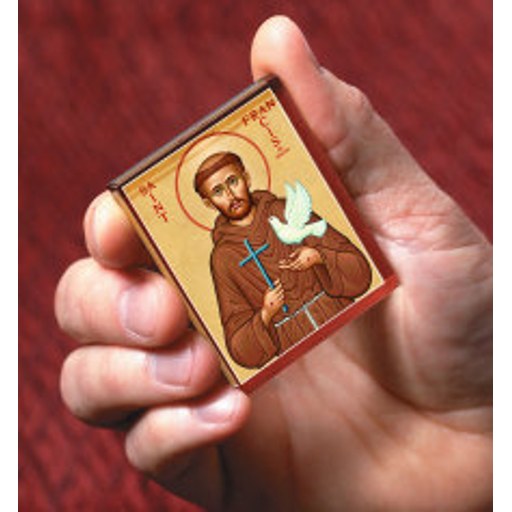
https://monasteryicons.com/product/st-francis-icon-411/icons-of-saints
License: unknown
Felician
Saint- Life Span
- d. 250
- Feast Day
- 24 January
- Gender
- male
- Church
- Catholic
Places
Roles & Family
Patronage
Foligno
Biography
Saint Felician, also known as Felician of Foligno (Latin Felicianus; Italian Feliciano di Foligno), is venerated as a third-century bishop and martyr whose cult has been centered on Foligno in Umbria since late antiquity. Later hagiographical tradition presents him as a native of Forum Flaminii, a settlement a few miles from Foligno on the Via Flaminia. That tradition further assigns his birth to about 160, a figure derived from the claim that he died at an advanced age of roughly ninety years. No contemporary document confirms the year of his birth, and historians treat the precise chronology as legendary rather than independently attested.
According to the same tradition, Felician was converted in youth, spent time in Rome, and was ordained. He is said to have been consecrated bishop of Foligno by Pope Victor I around 204. For several decades he is credited with preaching throughout Umbria, establishing Christian communities, and governing the church of Foligno. While the detailed itinerary of his apostolate belongs to later legend, the existence of an early bishop of Foligno named Felician who was remembered as a martyr is the core of the local tradition recorded in the Roman Martyrology.
The passio of Felician, composed well after the third century, describes his arrest during the persecution of the emperor Decius (reigned 249–251). In that account the aged bishop was tortured and died of his injuries at Foligno. The Roman Martyrology commemorates him on 24 January as bishop and martyr of Foligno who, after many labours in his later years, was crowned with martyrdom in the Decian persecution. His death is therefore conventionally placed about the year 250, though the exact day and year are not independently documented by contemporary sources.
Felician is the principal patron of Foligno. The cathedral of the city, the Cattedrale di San Feliciano, is dedicated to him and houses relics associated with the saint. His cult is of considerable antiquity in Umbria. He was never the subject of a formal papal canonization of the later medieval type; his sainthood rests on the ancient and continuous veneration of the local church, later recognized in the universal martyrology. Modern critical hagiography regards the biographical particulars of the passio as largely unhistorical while accepting that the church of Foligno preserved the memory of an early bishop-martyr of this name.