Felicitas of Padua is a saint of the Catholic Church. Felicitas of Padua's feast day is celebrated on 26 March.
Didier Descouens
License: CC BY-SA 4.0
Felicitas of Padua
Saint- Feast Day
- 26 March
- Gender
- female
- Church
- Catholic
Places
Roles & Family
Religious Information
Biography
Saint Felicitas of Padua is a little-known holy woman of the early medieval Latin Church, commemorated as a Benedictine nun of the ninth century. Almost no contemporary documentation of her life survives. She is known principally from later liturgical calendars, Benedictine menologies, and the long-standing presence of her relics at Padua in the Veneto. In this she resembles many local saints of northern Italy whose cults were maintained by monastic communities and by the faithful of a single city rather than by a widely circulated written legend or a detailed medieval vita.
As a member of the Order of Saint Benedict, Felicitas would have professed the Rule of Saint Benedict, with its emphasis on stability, conversion of life, and obedience, and on the daily round of the Divine Office, lectio divina, and work. The surviving notices do not name her monastery, her abbess, her family, or the date of her profession. They do not record martyrdom, a public apostolate, or miracles attributed to her during her lifetime. The tradition simply presents her as a nun whose holiness was recognized after her death by the community that preserved her memory and her remains. No reliable account of her birthplace or of the circumstances of her death has been transmitted.
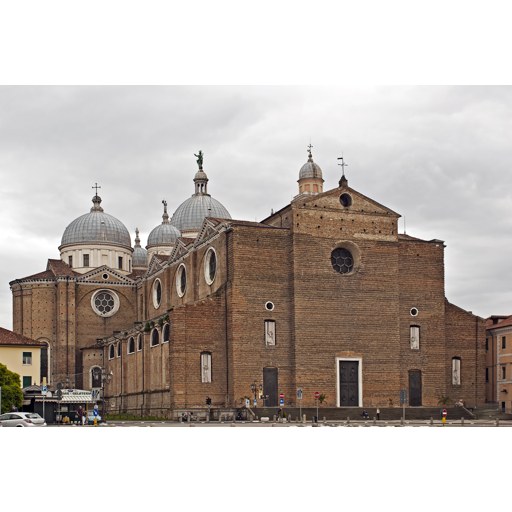
Her relics are venerated in the Basilica of Saint Justina (Santa Giustina) in Padua, a church of great antiquity associated with the Paduan martyr Justina and, in the Middle Ages, with a powerful Benedictine abbey. The basilica became a notable shrine and a resting place for numerous relics. The presence of Felicitas among them indicates that her cult was tied to this monastic and civic centre, whether she had belonged to the community of Santa Giustina itself or her body was brought there in a later translation. No trustworthy narrative of such a translation has been preserved, and the sources do not state with independent precision the place of her death.
The Roman Catholic Church keeps her feast on 26 March. She is not known to have been the subject of a papal canonization in the later, juridical sense; her status as a saint belongs to the older pattern of local and liturgical recognition of holiness. No distinctive patronages of places, causes, professions, or groups are securely attached to her name in the standard directories of saints. The historian must therefore be content with a brief and sober notice: a ninth-century Benedictine nun, honoured at Padua, whose relics rest in the Basilica of Saint Justina, and whose feast is observed on 26 March. Anything beyond that would be conjecture rather than history.