Felix is a saint of the Catholic Church.
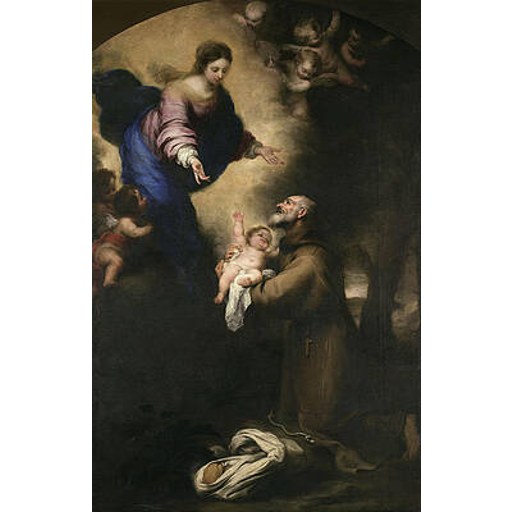
https://fineartamerica.com/art/paintings/st+felix
License: unknown
Felix
Saint- Gender
- male
- Church
- Catholic
Biography
The single given name Felix is not enough to identify one historical person. In Latin the name means fortunate or happy, and it was borne by a large number of early Christians, Roman clerics, martyrs, and later religious. Martyrologies, papal lists, and local calendars record many distinct men called Felix, including several Bishops of Rome (among them Felix I in the third century, Felix III in the fifth, and Felix IV in the sixth), the priest Felix of Nola in Campania, companions of other martyrs such as Felix and Adauctus at Rome, African and Spanish confessors, and later figures such as Felix of Valois and Felix of Cantalice. Their dates, sees, and cults do not coincide. Without a second name, a see, a feast, a century, or a reliable identifier such as a Wikidata item, none of those lives can be assigned to this subject.
Because the request supplies no further identifier, no birth year, death year, birthplace, burial, order, marriage, children, papal or patriarchal office, feast, patronage, or canonization can be verified for this Felix. Office-taking years that appear in papal or episcopal lists are not birth years and are not used here. Claims sometimes repeated in popular saint books—precise natal cities, invented childhoods, or a single universal patronage—cannot be tied to an unnamed Felix and are omitted.
In the Latin Church the name appears already in the first centuries of the Roman calendar. Felix of Nola, a priest associated with the cult of Saint Maximus and later with Paulinus of Nola’s poetry, is among the better-attested early examples, but even his birth year is not securely known. Separate Roman martyrs named Felix are listed on several different days. Medieval and early modern religious life added further homonyms: a putative co-founder of the Trinitarians called Felix of Valois, whose historical existence has been debated by modern historians, and the Capuchin lay brother Felix of Cantalice (died 1587), whose life is documented in a different century and order. Coptic and other Eastern lists likewise contain bishops and monks named Felix or equivalent forms. These are distinct people.
Hagiographical caution therefore requires leaving biographical fields empty rather than merging several saints into one composite. Anyone seeking a particular Felix should specify a qualifier—pope and number, place (Nola, Cantalice, Valois, Nicosia, and so on), religious order, or feast date—so that dates and cult can be checked against martyrologies, papal catalogs, and critical scholarship. Until that identification is given, the present record can affirm only that Felix is a masculine name widely used among Christian clergy and saints, and that no single verified life attaches to the name alone.