Felix is a saint of the Catholic Church.
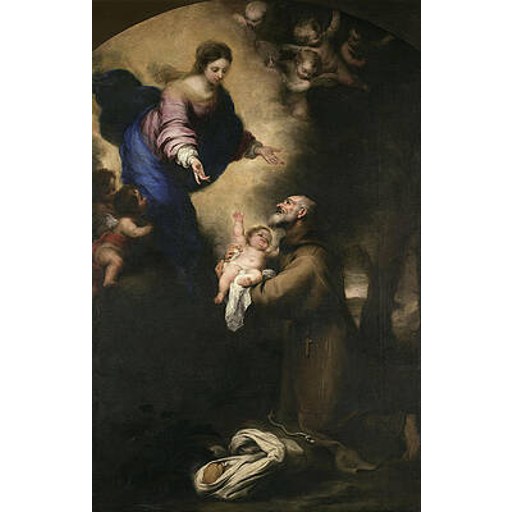
https://fineartamerica.com/art/paintings/st+felix
License: unknown
Felix
Saint- Gender
- male
- Church
- Catholic
Biography
The Latin name Felix (“happy” or “fortunate”) was borne by a very large number of Christian saints, martyrs, popes, and later religious, especially in the Roman world of late antiquity and in medieval and early modern Italy. The request gives no Wikidata identifier, no encyclopedia article, no feast day, no century, and no place, so a single historical person cannot be identified. The Roman Martyrology and related calendars commemorate many dozens of saints and blesseds named Felix. Their lives range from third-century Campanian confessors and Roman martyrs to early modern Capuchin friars. Any one of them might be intended. The biographical fields above are therefore left blank rather than filled by conjecture, in keeping with the rule that an office-taking year must never be substituted for a birth year and that an unverified fact must not be guessed.
Among the best-attested early figures is Felix of Nola, a priest of Campania in southern Italy. Saint Paulinus of Nola, writing in the late fourth and early fifth centuries, already celebrated his cult in a series of natalicia poems. Paulinus presents Felix as the son of a man from the East who had settled at Nola, as a priest who suffered confiscation and imprisonment in the Decian persecution of the mid-third century, and as a confessor who died in peace and was buried at Nola, where a basilica later rose over his tomb. His feast has long been kept on 14 January. No reliable ancient source gives a year of birth. He is not recorded as Bishop of Rome or as a patriarch of an Eastern see. A separate Roman pair, Felix and Adauctus, were commemorated on 30 August as martyrs; their surviving Acts are late and historically thin, and neither birth nor death year can be verified from a contemporary source.
Several bishops of Rome also bore the name. Felix I governed the Roman church in the later third century and is commemorated on 30 May. Felix III (sometimes numbered II because of an antipope of the same name) held the see in the late fifth century and was involved in the Acacian schism with Constantinople. Felix IV was pope in the early sixth century. In each case the year of death is tied to the end of a pontificate rather than to an independently documented natal date, and birth years are unknown. None of these identifications can be assumed for an unspecified “Felix.” None of these popes is known to have been a patriarch of an Orthodox, Oriental Orthodox, Coptic, or Church of the East see in the sense required here, beyond the ordinary Roman claim of primacy.
In the later Middle Ages and the early modern period the name continued in religious use. Felix of Cantalice was a Capuchin lay brother, born at Cantalice in the Papal States in 1515 and died at Rome in 1587; he was noted for street preaching and charity in Rome, was canonized by Pope Clement XI in 1712, and is commemorated on 18 May. A medieval figure known as Felix of Valois was long venerated as co-founder of the Trinitarian Order with John of Matha, with a traditional feast on 20 November, but modern historical criticism has treated much of that biography as poorly documented and in part legendary, so his birth year, death year, and even historical existence cannot be asserted here with the same confidence. Other local martyrs and bishops named Felix appear in African, Spanish, and Gallic calendars; their dossiers are often limited to a name, a place, and a feast.
Because the subject cannot be identified with any one of these persons, no single birth year, death year, birthplace, burial site, religious order, spouse, patronage list, or canonizing or beatifying authority can be verified from a reliable source. The masculine Latin given name implies male gender in the Christian onomastic tradition of the figures surveyed above. Further identifying information—a feast day, a see, a century, or a place—would be required before any of the empty fields could be filled.