Felix is a saint of the Catholic Church.
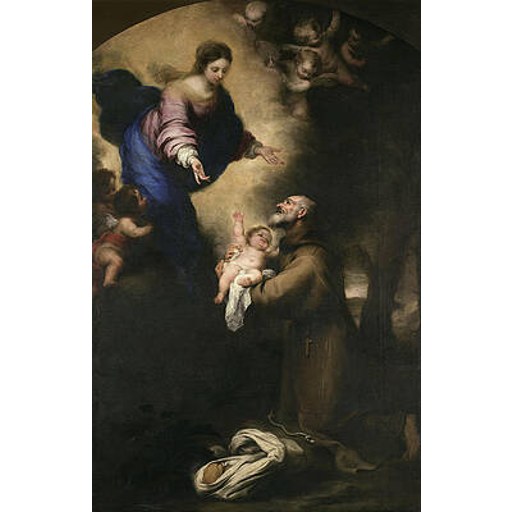
https://fineartamerica.com/art/paintings/st+felix
License: unknown
Felix
Saint- Gender
- male
- Church
- Catholic
Biography
The designation Felix cannot be matched to a single historical person on the information supplied. Felix, a common Latin cognomen meaning fortunate, appears repeatedly in martyrologies, papal lists, and later religious orders. No Wikidata identifier, diocese, century, companion, or feast day was given, so the following remarks survey the principal Christian figures of that name rather than claiming to reconstruct one life. Birth years in particular are almost never recorded for late antique saints and must not be inferred from the year a man became bishop or pope.
Several Bishops of Rome bore the name. Felix I is placed in the third century and is commemorated as a martyr in later tradition, though contemporary evidence for his pontificate is thin. Felix III (often numbered Felix II in older lists that skipped an antipope) belonged to a Roman senatorial family in the later fifth century and is associated with the Acacian schism. Felix IV held the Roman see in the early sixth century. None of these popes has a verified year of birth; their origins are generally given as Rome or, in some cases, are simply unknown. They are distinct from one another and from the many non-papal saints named Felix.
Among the most widely culted non-papal figures is Felix of Nola, a third-century priest of Campania. Paulinus of Nola, writing in the late fourth and early fifth centuries, celebrated Felix's tomb at Nola and described him as a confessor who suffered in persecution and devoted himself to the poor. His feast has commonly been kept on 14 January. Other early dossiers include the Roman martyrs Felix and Adauctus, assigned by tradition to the Diocletianic persecution and commemorated on 30 August, and Felix of Burgundy, a seventh-century bishop who worked in East Anglia and whose see is associated with Dunwich. The historical value of the shorter martyr acts varies; many are late and legendary.
In the medieval and early modern periods the name continued in use. Felix of Valois is named in Trinitarian tradition as a companion of John of Matha in the late twelfth and early thirteenth centuries; modern historical criticism has treated his independent existence as uncertain, and details of his life should not be repeated as established fact. Felix of Cantalice, born in the sixteenth century at Cantalice in the Papal States and died in Rome, was a Capuchin lay brother noted for collecting alms and for a popular reputation for holiness; he was canonized in the early eighteenth century by Pope Clement XI. His feast is kept on 18 May in the General Roman Calendar. Patronages, burial sites, and orders attach to these separate cults and cannot be combined.
Because the subject was not disambiguated, fields that require a unique identity—years of birth and death, places, spouse, children, papal or patriarchal office, a single feast day, a list of patronages, and the names of those who beatified or canonized the person—are left empty. The Latin name is masculine. A reliable identification would need at least one of the following: a see or town (Nola, Cantalice, Dunwich, or Rome), a religious order (for example Capuchin), a precise feast, or a century. Until then no single hagiographical biography can be verified.