Felix of Como is a saint of the Catholic Church (d. 391). Felix of Como's feast day is celebrated on 14 July.
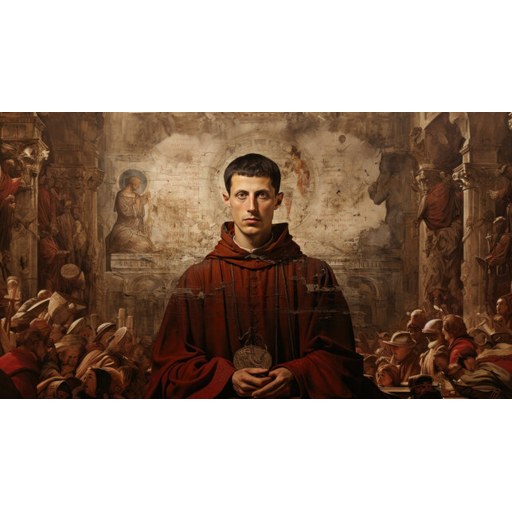
https://stock.adobe.com/search?k=saints+painting
License: unknown
Felix of Como
Saint- Life Span
- d. 391
- Feast Day
- 14 July
- Gender
- male
- Church
- Catholic
Places
Roles & Family
Biography
Felix of Como was the first bishop of the church of Como in northern Italy during the later fourth century. Almost nothing is known of his family, birth, or early life; neither a year nor a place of birth is recorded in sources that can be independently verified. He belongs to the generation of Italian bishops formed in the decades after the Constantinian settlement, when the Christian church was consolidating its diocesan structure in the cities of the Roman West. Later tradition of the diocese of Como presents him as a friend of Ambrose of Milan and states that Ambrose consecrated him bishop, thereby founding the see. That consecration is commonly placed in the later fourth century and is often dated to 379 in diocesan memory, although contemporary documentation of the exact year is lacking.
Como lay on the southern approaches to the Alps, on the lake that still bears its name. Christianity was established in the larger cities of the region, above all Milan, but the countryside and some lakeside communities retained older cults. As first bishop, Felix is credited with organizing a local church under Milanese metropolitan influence and with advancing the Christian faith in his territory. The creation of a bishopric at Como fits a wider fourth-century pattern in which new sees were erected as the church expanded its pastoral reach. Ambrose’s role, as related by tradition, placed Como within the orbit of Milan, then one of the most important churches in the Western empire.
A letter of Ambrose addressed to a Bishop Felix is generally taken to refer to the bishop of Como; in it the bishop of Milan writes as to a colleague and friend, including on matters such as the dedication of a church and the sending of relics. Beyond this association, personal details remain scarce. Felix is not known to have belonged to a monastic order. Sources do not record a wife or children, nor do they explicitly document a vow of celibacy, though Ambrose was a leading advocate of clerical continence in this period. Claims about Felix’s inner life, miracles, or missionary journeys that appear in later pious literature cannot be confirmed from early evidence.
Tradition assigns his death to the year 391. He was followed in the see by later bishops among whom Saint Provino and, in the fifth century, Saint Abundius (Abbondio) are especially remembered; Abundius became the principal patron of Como. Felix himself has been venerated as a saint from an early date. His cult is of the ancient, pre-congregation type and was not the product of a medieval or modern papal canonization. The Roman Martyrology commemorates him on 14 July as the first bishop of Como, consecrated by Saint Ambrose. Relics associated with him have been preserved and honored in Como. Because the historical record is thin, a careful account must distinguish the few points that rest on early tradition and liturgical memory from later elaboration: that he was first bishop of Como, that he was linked to Ambrose of Milan, and that the church has remembered him as a saint on 14 July.