Floride de Dijon is a saint of the Catholic Church.
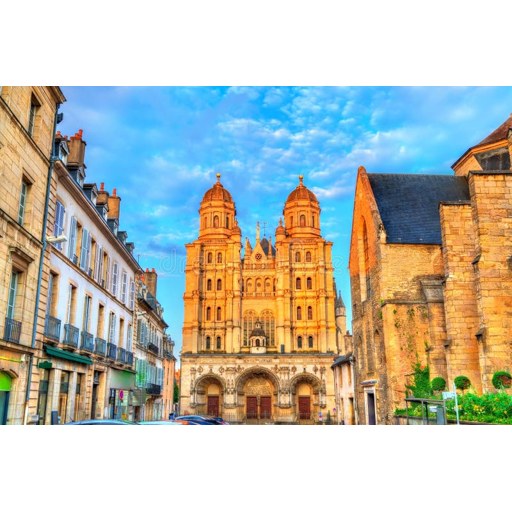
https://dreamstime.com/photos-images/dijon.html
License: unknown
Floride de Dijon
Saint- Gender
- female
- Church
- Catholic
Roles & Family
Biography
Floride de Dijon is an obscure figure whose name appears in connection with Dijon in Burgundy, France, but who is not attested in the principal published hagiographical collections. She does not occur in the Roman Martyrology, the Acta Sanctorum, Butler’s Lives of the Saints, or the standard modern dictionaries of saints. As a result, the most basic biographical facts—year of birth, year of death, family origin, and the precise nature of any religious vocation—cannot be verified from widely available reliable historical sources.
Dijon has been an important ecclesiastical centre since late antiquity. The cult of the martyr Saint Benignus was established there in the early medieval period, and the city later became the seat of a bishopric and the site of notable Benedictine, Cistercian and other monastic foundations. A person styled “de Dijon” may have been born in the city, entered a local convent, or been the object of limited local remembrance. None of these possibilities can be confirmed without unpublished archival evidence from the diocese of Dijon or the departmental archives of the Côte-d’Or.
The given name Floride is a feminine form derived from Latin floridus (“flowering”). It was used, though not commonly, in French-speaking Catholic families, especially in the early modern centuries, and could also have been taken as a name in religion. This linguistic evidence supports identifying the subject as female, but it does not establish whether she was a nun, a tertiary, a pious laywoman, or another category of person. No religious order can be assigned to her on the basis of published records.
No liturgical feast, official beatification, or canonization is recorded for Floride de Dijon. She is not listed as patron of any place, profession, illness or group. If any local devotion ever existed, it has left no trace in the sources that would allow a historian to reconstruct her life with confidence. Further progress would require systematic examination of unpublished diocesan, conventual and notarial documents from Burgundy.