Franc Kek is a servant of god of the Catholic Church (1863 - 1936).
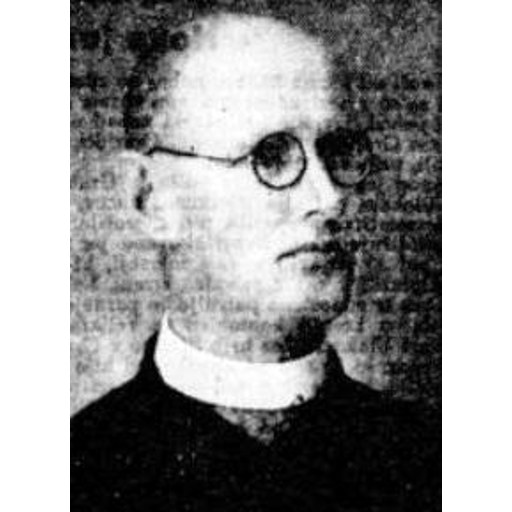
Unknown authorUnknown author
License: Public domain
Franc Kek
Servant of God- Life Span
- 1863 - 1936 (age 73)
- Gender
- male
- Church
- Catholic
Places
Roles & Family
Biography
Franc Kek was a Slovene lawyer and politician whose public career unfolded during the last decades of Habsburg rule in the South Slavic lands and the early years of the Yugoslav kingdom. He was born on 16 October 1863 in Lož, a settlement in Inner Carniola that then belonged to the Austrian Empire. After gymnasium studies he read law at the universities of Graz and Vienna and obtained a doctorate. In the early 1890s he established a legal practice in Ljubljana, the political and cultural centre of the Slovene lands.
Kek entered politics as a member of the Catholic national movement. He belonged to the Slovene People's Party (Slovenska ljudska stranka), which combined Slovene national demands with Catholic social teaching and loyalty to the Habsburg dynasty. He sat in the Carniolan Provincial Assembly (Kranjski deželni zbor), where he spoke on questions of language use in administration and schools, agrarian credit, and local self-government. His generation of Catholic politicians generally favoured a trialist or federal rearrangement of the monarchy that would give the South Slavs a distinct constitutional position rather than complete independence.
The First World War and the subsequent formation of the Kingdom of Serbs, Croats and Slovenes in 1918 transformed the political framework in which Kek operated. He remained associated with the clerical Slovene party, now functioning within a Yugoslav state whose centralist constitution of 1921 was viewed with misgiving by many Slovene autonomists. While the most prominent figure of that camp was Anton Korošec, Kek belonged to the broader circle of Catholic lawyers and parliamentarians who sought to protect Slovene linguistic and cultural institutions. Detailed records of every office he held after 1918 are not abundant in standard reference works, but his continued presence in Ljubljana public life is attested.
Kek died in Ljubljana on 12 January 1936. He was a lay Catholic professional rather than a cleric or member of a religious order, and he has never been proposed for beatification or canonization. His biography is that of a typical nationally engaged Slovene jurist of the Catholic political tradition at a moment when the Slovene lands passed from Habsburg to Yugoslav sovereignty. Surviving sources concentrate on his party affiliation and provincial-diet activity; personal details such as marriage and family remain sparsely documented in readily accessible historical literature.