Francesco Chiesa is a venerable of the Catholic Church (1874 - 1946).
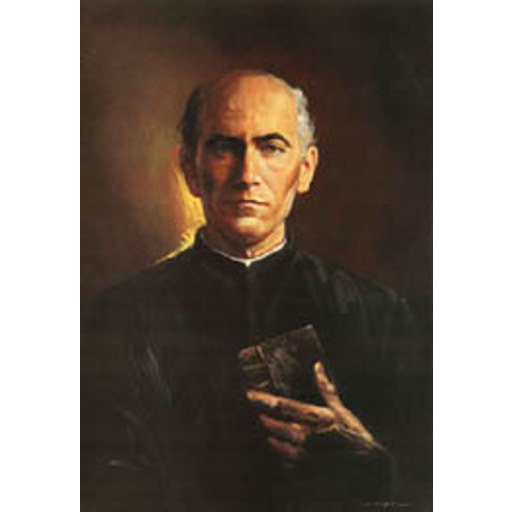
Towarzystwo Świętego Pawła
License: CC BY-SA 4.0
Francesco Chiesa
Venerable- Life Span
- 1874 - 1946 (age 72)
- Gender
- male
- Church
- Catholic
Places
Roles & Family
Biography
Francesco Chiesa was an Italian diocesan priest of the late nineteenth and first half of the twentieth century, whose life and ministry were bound to the Diocese of Alba in Piedmont. He was born in 1874 in Montà, a rural commune in the province of Cuneo, in the Langhe hills of what was then the Kingdom of Italy. The region was marked by parish-centered Catholic life and a steady stream of vocations to the secular clergy. He received his formation in the seminary of Alba and was ordained a priest in the closing years of the nineteenth century. He was incardinated in that diocese and never transferred to another see, a religious institute, or missionary work abroad.
The greater part of his priesthood was spent as a professor in the diocesan seminary of Alba, where he taught the philosophical and theological disciplines then customary in Italian seminaries and also served as a spiritual director to seminarians and priests. Accounts of his life present him as a priest of regular habits, devoted to the celebration of the sacraments and to traditional Eucharistic and Marian piety, and as a counselor who was widely sought out. He did not found a congregation, was not consecrated a bishop, and held no office beyond the ordinary round of seminary teaching and the care of souls. His reputation rested on availability, doctrinal solidity, and an unspectacular fidelity to the diocesan priesthood rather than on public office or controversy.
His ministry unfolded across a turbulent span of Italian and ecclesiastical history: the aftermath of national unification, the modernist crisis, the First World War, the Fascist period, and the Second World War. Piedmontese dioceses had to navigate state pressure on Catholic associations, wartime mobilization, and social change, while the Holy See under Pius X and his successors pressed for a more frequent sacramental life and a carefully formed clergy. Chiesa is remembered within that setting as a resident formator rather than as a national figure or polemicist. He remained a Latin-rite diocesan priest bound to celibacy and is not recorded as having married or had children.
He died in Alba in 1946, not long after the end of the Second World War. A local reputation for holiness led to the introduction of a cause of beatification. During the pontificate of John Paul II the Holy See recognized the heroic character of his Christian virtues, and he is therefore styled Venerable in the Catholic Church. He has not been beatified or canonized, has no feast in the General Roman Calendar, and is not commonly invoked as patron of particular places, professions, or causes. His memory is preserved chiefly in the Diocese of Alba as an example of the modern Italian diocesan clergy.