Francis de Sales is a saint of the Catholic Church (1567 - 1622). Francis de Sales's feast day is celebrated on 24 January. Francis de Sales is the patron saint of writers;journalists;authors;editors;the Catholic press;the deaf;educators;teachers;confessors;the Salesians;Champaign, Illinois;Archdiocese of Cincinnati;Diocese of Columbus;Diocese of Wilmington;Diocese of Baker.
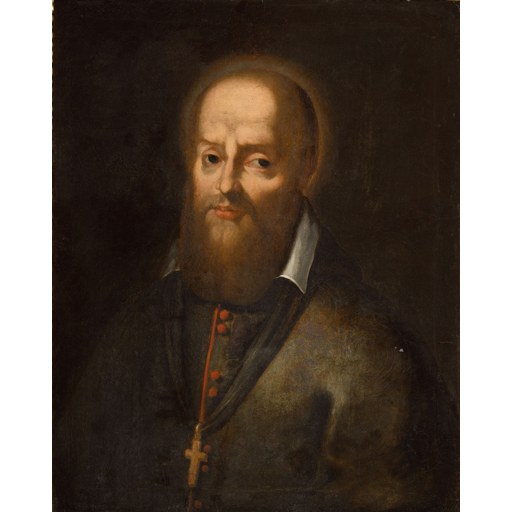
Benjamin Gavaudo
License: Public domain
Francis de Sales
Saint- Life Span
- 1567 - 1622 (age 55)
- Feast Day
- 24 January
- Gender
- male
- Church
- Catholic
Places


Relics & Where to Venerate
Location unknown
The bodily remains of Francis de Sales are a first-class relic. Venerated at Annecy.
Roles & Family
Patronage
writers;journalists;authors;editors;the Catholic press;the deaf;educators;teachers;confessors;the Salesians;Champaign, Illinois;Archdiocese of Cincinnati;Diocese of Columbus;Diocese of Wilmington;Diocese of Baker
Canonization
Biography
Francis de Sales was born in 1567 at the Château de Sales in Thorens, in the Duchy of Savoy, the eldest son of the nobleman François de Sales, Lord of Boisy, and Françoise de Sionnaz. His father intended him for a legal and political career in the service of the duke. After early schooling at La Roche and Annecy he was sent to the Jesuit Collège de Clermont in Paris, where he studied rhetoric and the humanities. During those years he underwent a severe spiritual crisis over the doctrine of predestination, from which he emerged with a lasting conviction of the mercy of God and a spirituality marked by confidence rather than fear. He then studied civil and canon law at the University of Padua, taking a doctorate, while also pursuing theology. Against his father's wishes he chose the priesthood. He was ordained in the 1590s and was soon named provost of the cathedral chapter of Geneva, a see whose bishops resided at Annecy because the city of Geneva itself was under Calvinist control.
In the mid-1590s he undertook a missionary campaign in the Chablais, a Savoyard territory south of Lake Geneva that had adopted the Reformation. Working often on foot and in hardship, he relied on preaching, personal conversation, and short written tracts rather than force. Over several years a large part of the population returned to Catholicism, and his reputation for learning, patience, and courtesy spread beyond Savoy. He was named coadjutor to the aged Bishop of Geneva and, in the early seventeenth century, succeeded to the see. He administered the diocese from Annecy, reforming the clergy, organizing catechesis, and making pastoral visitations. He became a sought-after spiritual director of both religious and lay people, corresponding widely and insisting that a devout life was possible in every state of life, not only in the cloister. His manner, combining firm doctrine with gentleness of address, later earned him the popular title of the Gentleman Saint.
Together with Jane Frances Frémyot de Chantal, a widow of the Burgundian nobility, he founded in 1610 the Order of the Visitation of Holy Mary. The congregation was intended at first to combine contemplation with works of mercy and to be open to women whose health, age, or widowhood barred them from more austere orders; it later developed a more enclosed character under Roman direction, while remaining closely associated with his name. His principal books, the Introduction to the Devout Life and the Treatise on the Love of God, circulated widely in his lifetime and afterward. The former, addressed to a laywoman living in the world, became one of the most influential manuals of Catholic spirituality in the early modern period. He also left numerous sermons, letters of direction, and controversial writings against Calvinism, composed in a moderate tone that later contributed to his being named patron of journalists and writers. He devised a method of instruction for a deaf man in his household, which is the historical basis of his patronage of the deaf.
Francis de Sales died at Lyon at the end of 1622, while returning from a journey connected with the marriage of the Prince of Piedmont to a French princess. He expired in the gardener's cottage of the Visitation convent there. His body was taken to Annecy and buried at the first monastery of the Visitation; it now rests in the Basilica of the Visitation in that city. He was beatified and then canonized in the 1660s by Pope Alexander VII. In the nineteenth century Pope Pius IX declared him a Doctor of the Church. His feast is kept on 24 January in the General Roman Calendar. The Salesian family of congregations founded by John Bosco in the nineteenth century took his name and his pastoral gentleness as their model. He remains one of the principal spiritual writers of the Catholic Reformation, read for his teaching that holiness is compatible with ordinary social and professional life.