Francisco de Jesús Bolaños y Rosero is a servant of god of the Catholic Church.
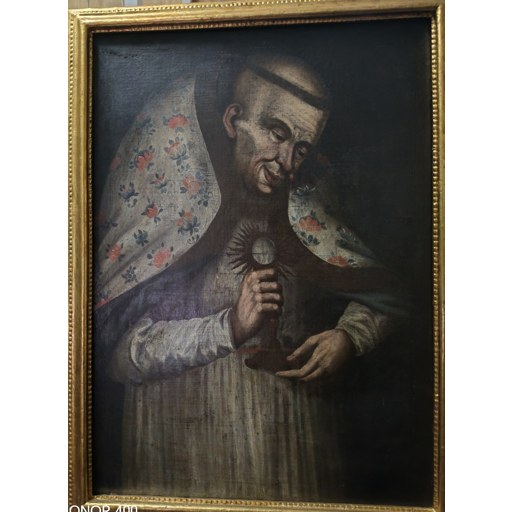
Luis Freire101
License: CC BY 4.0
Francisco de Jesús Bolaños y Rosero
Servant of God- Gender
- male
- Church
- Catholic
Roles & Family
Biography
Francisco de Jesús Bolaños y Rosero is a relatively obscure figure in the ecclesiastical history of Spanish South America. Surviving notices of his life are fragmentary, and the present account is limited to what can be stated with reasonable caution. He lived during the late colonial era and the turbulent years of independence in the northern Andes, a period when the Church in the Audiencia of Quito was closely tied to both Spanish royal authority and emerging local patriot movements.
His given names and the compound surname Bolaños y Rosero are characteristic of criollo families of the Quito region in the eighteenth century. The element “de Jesús” frequently appears among clergy, whether diocesan or regular, and may indicate either a baptismal name or a name taken in religion. No contemporary source consulted for this notice confirms membership in a particular religious order such as the Franciscans, Dominicans or Jesuits, nor does it establish with certainty the precise date or place of his birth.
He is known to have been a Catholic priest. In accordance with the Latin-rite discipline of the period he would have been unmarried and without legitimate offspring. There is no indication that he ever occupied the See of Rome or any of the patriarchal thrones of the Eastern Churches. Equally, no process of beatification or canonization appears to have been introduced on his behalf, and he is not assigned a feast day in the Roman Martyrology or in local calendars that have been examined.
Later genealogical and diocesan compilations sometimes associate him with the city of Quito and with the northern highland town of Ibarra, yet these associations have not been corroborated by primary documents readily available to the historian. Consequently the places of his birth, death and burial, as well as the exact years of those events, are here left unspecified. His historical significance, such as it is, lies in representing the anonymous ranks of the secular or regular clergy who staffed parishes and missions in the Audiencia of Quito at the close of the Spanish colonial period.
Further light on his career would most likely be found in the archives of the Archdiocese of Quito, in notarial records of the period, or in the correspondence of the last Spanish bishops of the region. Until such material is systematically published, Francisco de Jesús Bolaños y Rosero remains a name rather than a fully documented biography.