Franco da Assergi is a saint of the Catholic Church (d. 1257). Franco da Assergi's feast day is celebrated on 5 June. Franco da Assergi is the patron saint of Assergi.
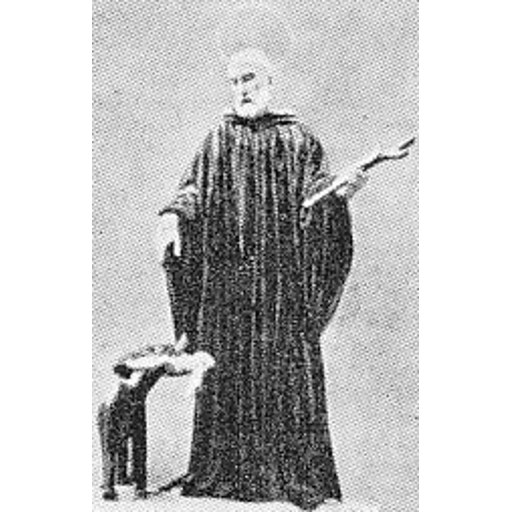
https://catholicsaints.info/saint-franco-of-assergi/
License: unknown
Franco da Assergi
Saint- Life Span
- d. 1257
- Feast Day
- 5 June
- Gender
- male
- Church
- Catholic
Places
Roles & Family
Religious Information
Patronage
Assergi
Biography
Franco da Assergi, known in Italian as San Franco d'Assergi, was a Catholic hermit of the thirteenth century whose cult is centered in the mountain village of Assergi in Abruzzo, in central Italy. He was born in Assergi itself, a settlement lying on the southern slopes of the Gran Sasso d'Italia. No contemporary document records the year of his birth, and later hagiographers do not supply a reliable date. According to local tradition he entered the Benedictine monastery of San Giovanni Battista at Lucoli, a house situated in the nearby highlands west of what is now L'Aquila. There he lived for a time under the Rule of Saint Benedict before seeking a stricter solitude.
Leaving the monastery, Franco withdrew to a cave in the Gran Sasso massif in the vicinity of his native village. He passed the remainder of his life as a hermit, occupied in prayer, manual labor, and severe fasting. The landscape around Assergi is high, rocky, and poor in water; tradition holds that Franco obtained a spring by prayer or by striking the rock, a source still called the Fonte di San Franco and long used by shepherds and villagers. Other local legends attribute to him a gentle power over wild animals and various acts of assistance to peasants and travelers, but these stories belong to oral and later written tradition rather than to dated medieval records.
The day of his death is commemorated on 5 June, which became his feast day; later compilations frequently give the year as 1257, although that year is not confirmed by independent thirteenth-century testimony. He was buried at Assergi, and his relics were placed in the parish church of Santa Maria Assunta, a Romanesque building that remains the focal point of his cult. Franco was never the subject of a formal papal canonization of the type later regulated by the Holy See; his sainthood rests on immemorial local veneration, typical of many rural Italian hermits of the high Middle Ages. He is honored as the patron saint of Assergi.
Devotion to San Franco has persisted in Assergi and the surrounding communities of the L'Aquila district. His feast on 5 June is marked by liturgical celebration and popular customs, and the hermitage site and spring associated with his name continue to attract local pilgrimage. Historical knowledge of his life remains limited: no vita written within a generation of his death has survived, and the outline given above depends on later Abruzzese tradition, liturgical calendars, and the physical association of relics and place-names with his memory. He belongs to the numerous company of medieval Italian hermits whose holiness was recognized by their neighbors and whose cult never spread far beyond their native mountains.