Frédéric-Vincent Lebbe is a servant of god of the Catholic Church (1877 - 1940).
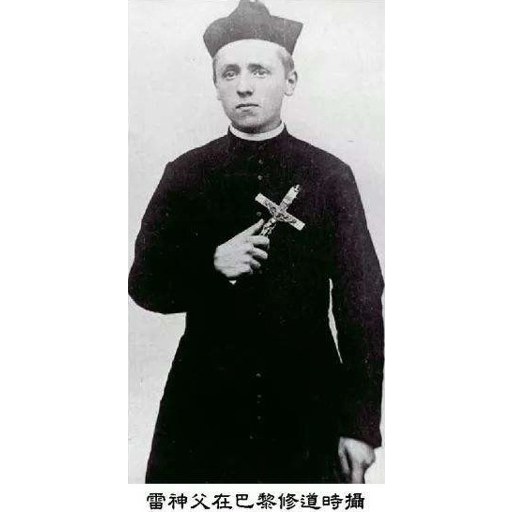
Unknown authorUnknown author
License: Public domain
Frédéric-Vincent Lebbe
Servant of God- Life Span
- 1877 - 1940 (age 63)
- Gender
- male
- Church
- Catholic
Places
Roles & Family
Religious Information
Biography
Frédéric-Vincent Lebbe was a Belgian Catholic priest and missionary of the Congregation of the Mission (Vincentians, also called Lazarists), known in Chinese as Lei Mingyuan, and one of the principal advocates of a native Chinese Catholic Church in the first half of the twentieth century. He was born in Ghent, Belgium, in 1877, entered the Vincentian congregation, and after ordination was sent to China, where he worked in the early decades of the century, especially in and around Tianjin. Unlike many European missionaries of his generation, he devoted himself to the Chinese language and identified strongly with Chinese national feeling, insisting that Catholicism in China should not remain under foreign control or appear as an extension of Western power.
In China Lebbe promoted Chinese Catholic journalism and lay organization. He was associated with the founding of the Catholic daily Yi Shi Bao in Tianjin, which became an influential paper. He repeatedly clashed with French missionary and consular authorities when he judged that European political interests were being placed above the good of Chinese Catholics. A notable controversy in Tianjin during the 1910s, involving the extension of the French concession, saw Lebbe take the Chinese side, which damaged his standing with parts of the missionary establishment and led to his being removed from China for a time. In Europe he continued to press Roman authorities and the missionary world to appoint Chinese bishops and to treat China as a local church rather than a mission field permanently directed from abroad.
His campaign, together with the work of Chinese clergy and other missionaries, contributed to the decision of Pope Pius XI to consecrate six Chinese bishops in Rome in 1926, the first such episcopal appointments of Chinese priests in the modern period. Lebbe took Chinese citizenship in 1927, an exceptional step for a European missionary, and he founded two Chinese religious institutes: the Little Brothers of Saint John the Baptist and the Little Sisters of Saint Theresa of the Child Jesus. These foundations were intended to root religious life in Chinese society and to form clergy and religious who were not dependent on foreign missionary structures. He remained a controversial figure, admired by many Chinese Catholics as a friend of China and regarded by some European colleagues as insubordinate or excessively nationalist.
During the Second Sino-Japanese War Lebbe organized medical and relief work for Chinese combatants and civilians. In 1940 he was detained by Communist guerrilla forces; after his release he was in broken health. He died in Chongqing, then the wartime capital of the Republic of China, in June 1940. He lived as a celibate priest of a religious congregation and was neither married nor a father of children. He has not been beatified or canonized, and the Catholic Church has not assigned him an official feast day or patronages. Historians of Chinese Christianity remember him as a central, if polarizing, figure in the movement to create a Chinese-led Catholic Church in the decades before 1949.