Gatianus of Tours is a saint of the Catholic Church (d. 301). Gatianus of Tours's feast day is celebrated on 18 December. Gatianus of Tours is the patron saint of Tours;Archdiocese of Tours.
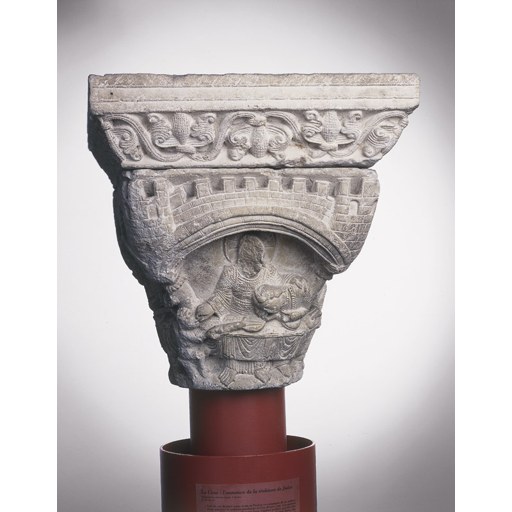
Anonyme toulousain
License: Public domain
Gatianus of Tours
Saint- Life Span
- d. 301
- Feast Day
- 18 December
- Gender
- male
- Church
- Catholic
Places
Sacred Place

Roles & Family
Patronage
Tours;Archdiocese of Tours
Canonization
Biography
Gatianus of Tours (also known as Gatien, Catianus, or Gratianus) is honored as the first bishop of Tours and as the missionary who first established a lasting Christian community in the Touraine. The principal narrative of his life comes from Gregory of Tours, who in the later sixth century compiled the history of his own see. According to Gregory, Gatianus was one of seven bishops sent from Rome into Gaul during the consulate of Decius and Gratus, that is in 250, by Pope Fabian. The companions named in the same tradition were Trophimus of Arles, Paul of Narbonne, Saturninus of Toulouse, Denis of Paris, Austromoine of Clermont, and Martial of Limoges. Historians generally regard the picture of a single, coordinated Roman mission of seven bishops as a later schematic legend, possibly designed to give several Gallic churches a shared early pedigree; nevertheless, Gatianus’s status as the founding bishop of Tours is the consistent local memory that Gregory recorded. No third-century inscription, letter, or administrative document independently confirms the details of his career, and his birthplace and family are unknown.
Gregory describes the Tours that Gatianus entered as still wholly given to pagan worship. The missionary found so little public support that he was obliged to celebrate the Christian mysteries in hiding, in crypts and caverns. Over a long period of labor, which Gregory quantifies as fifty years of episcopate, Gatianus slowly formed a congregation and preached both in the city and in the rural districts of the Loire valley. No letters, sermons, or other writings by Gatianus are known. The entire biographical outline therefore rests on Gregory’s testimony, composed more than two hundred years after the events, together with the later medieval liturgical and hagiographical tradition of Tours. Later vitae embroider this outline with legendary episodes, but those additions cannot be verified from early sources.
Gatianus is traditionally said to have died at Tours at the beginning of the fourth century, a date often given as 301 in martyrologies that combine Gregory’s fifty-year figure with the arrival date of 250. After his death the church of Tours remained small; Gregory reports a vacancy in the see until the episcopate of Litorius in the fourth century, after which Martin of Tours made the diocese famous throughout Gaul. Gatianus was buried in a Christian cemetery outside the city. A church was subsequently built over his tomb, and in the Middle Ages his relics were enshrined in the cathedral of Tours, which received his name and is still known as the Cathedral of Saint-Gatien.
The Roman Martyrology commemorates him on 18 December. He is venerated as a patron of the city and of the Archdiocese of Tours. Like other saints of the earliest Gallic hierarchy, he belongs to the pre-congregation period of cultus: his sanctity was recognized by popular and episcopal veneration long before the later medieval processes of papal canonization existed. While almost every particular of his life remains beyond contemporary verification, Gatianus occupies a secure place in the ecclesiastical history of west-central Gaul as the first bishop associated with the see of Tours.