Gebhard of Salzburg is a blessed of the Catholic Church (d. 1088). Gebhard of Salzburg's feast day is celebrated on 15 June.
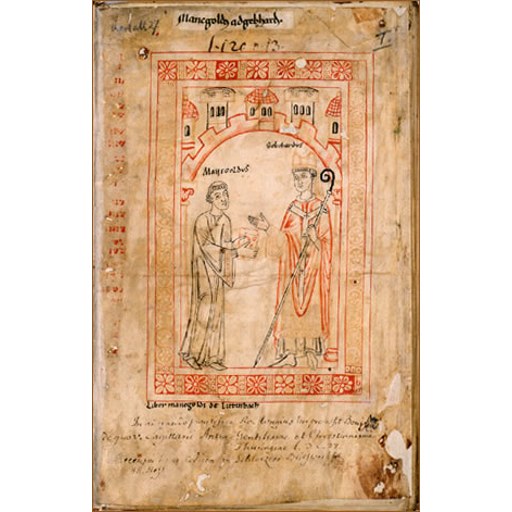
Manegold von Lautenbach
License: Public domain
Gebhard of Salzburg
Blessed- Life Span
- d. 1088
- Feast Day
- 15 June
- Gender
- male
- Church
- Catholic
Places
Roles & Family
Biography
Gebhard of Salzburg was Archbishop of Salzburg from 1060 until his death in 1088 and is venerated as a blessed in the Catholic Church. He was born around the early eleventh century into the nobility of the German kingdom; surviving sources do not record a securely attested birthplace or an exact year of birth, and later writers have variously associated his family with Bavarian or Swabian lineages. He entered the clergy and served at the imperial court, being described in the tradition as a chaplain of Emperor Henry III. In 1060, during the regency of Empress Agnes for the underage Henry IV, he was appointed to the metropolitan see of Salzburg, a vast ecclesiastical principality on the empire’s southeastern frontier, and was consecrated bishop in the same year.
As archbishop he belonged to the party of church reform that looked to Rome. He labored to enforce clerical celibacy, to curb simony, and to tighten diocesan administration over Alpine and Danubian territories that were still thinly organized. In 1072 he established the Diocese of Gurk in Carinthia as a suffragan see to assist in the pastoral care of his oversized diocese. In 1074 he founded the Benedictine abbey of Admont in Styria, which became one of the principal monastic houses of the region and the chief keeper of his cult. He also promoted parish foundations and the reform of existing religious communities within the Salzburg church.
When the Investiture Controversy broke out between Pope Gregory VII and King Henry IV, Gebhard stood with the papacy. He did not join the German bishops who, at Worms in 1076, withdrew obedience from Gregory, and he later supported the anti-king Rudolf of Rheinfelden. After Henry IV recovered his position following Canossa, Gebhard was expelled from Salzburg in 1077 and remained in exile for the better part of a decade, mainly in Saxony and Swabia, where he continued to work for the Gregorian cause. The imperial party put forward a rival claimant, Berthold, as anti-archbishop. Only in 1086, aided by Duke Welf I of Bavaria and other princes, did Gebhard regain his city and church.
He died on 15 June 1088, not long after his restoration. That date became his feast day. Memory of him was especially cultivated at Admont Abbey and in the church of Salzburg, where he was honored as a confessor who had endured exile rather than abandon the Roman see. Precise facts about his parentage, the place of his death, and the original site of his burial are not firmly established in contemporary evidence; hagiographical accounts of later centuries sometimes supplied such details without independent confirmation. He was never Bishop of Rome, nor did he hold a patriarchal title; Salzburg was a metropolitan archbishopric of the Latin Church.