Geminian is a saint of the Catholic Church (d. 397). Geminian's feast day is celebrated on 31 January. Geminian is the patron saint of Modena;San Gimignano.
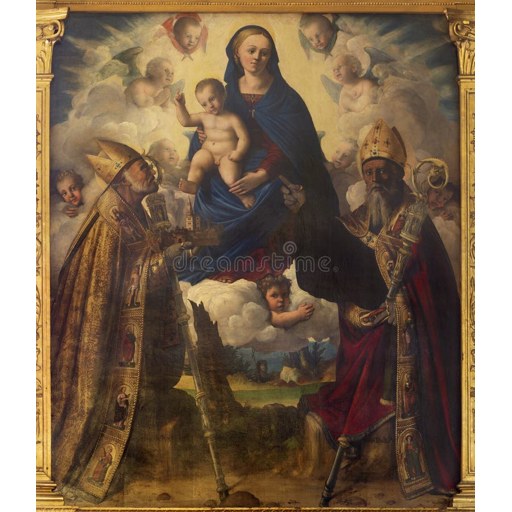
https://dreamstime.com/photos-images/saint-geminianus.html
License: unknown
Geminian
Saint- Life Span
- d. 397
- Feast Day
- 31 January
- Gender
- male
- Church
- Catholic
Places
Roles & Family
Patronage
Modena;San Gimignano
Canonization
Biography
Saint Geminianus (also Geminian; Italian San Geminiano) was a fourth-century bishop of Modena in Emilia in northern Italy. Traditional accounts, which are late and cannot be checked against contemporary records, present him as a native of Modena, born to a family of senatorial rank, who served the local church as a deacon before being chosen bishop. His episcopate belongs to the later fourth century, when the churches of northern Italy were still contending with Arianism and with the aftermath of the Council of Nicaea. Precise years of birth and of consecration are not preserved; later lists that assign him a long pontificate ending in 397 are conventional rather than documentary.
He is remembered as a defender of Nicene orthodoxy. Later sources associate him with Saint Ambrose of Milan and report that he took part in the Synod of Milan in 390, which condemned the monk Jovinian. No authentic letters or treatises by Geminianus survive, and the principal medieval vita was composed centuries after his death. That life, and the civic legends that grew around it, mix a kernel of episcopal memory with miracle stories: exorcisms, a journey eastward to heal an imperial princess, and supernatural protection of Modena from invading armies. The famous tale that he saved the city from Attila the Hun by wrapping it in fog cannot be historical if the traditional death date of 397 is accepted, since Attila’s Italian campaign took place in 452; the story nonetheless became part of Modenese identity and was later transferred to other places that claimed his patronage.
According to the received tradition he died in Modena on 31 January 397 and was buried there. His cult is already medieval. The present cathedral of Modena, a Romanesque church begun in the late eleventh century and now a UNESCO World Heritage site, is dedicated to him; his relics are kept in the crypt beneath the high altar. The Tuscan hill town of San Gimignano took its name from the same saint, whom local tradition likewise credited with protection against barbarian attack. His feast is kept on 31 January in the Roman Martyrology and in the local calendars of Modena and San Gimignano.
Beyond those two cities, securely attested patronages are few. He remains the principal patron of Modena and of San Gimignano. Formal papal canonization in the later medieval or modern sense did not occur; veneration is of the pre-Congregation type, resting on ancient cult, translation of relics, and liturgical commemoration. Historical reconstruction of his life must therefore remain modest: a fourth-century bishop of Modena, linked in later memory with the anti-Arian episcopate of Ambrose’s generation, whose tomb became the focus of a durable civic and liturgical cult.