Gerard of Clairvaux is a saint of the Catholic Church (d. 1138). Gerard of Clairvaux's feast day is celebrated on 13 June.
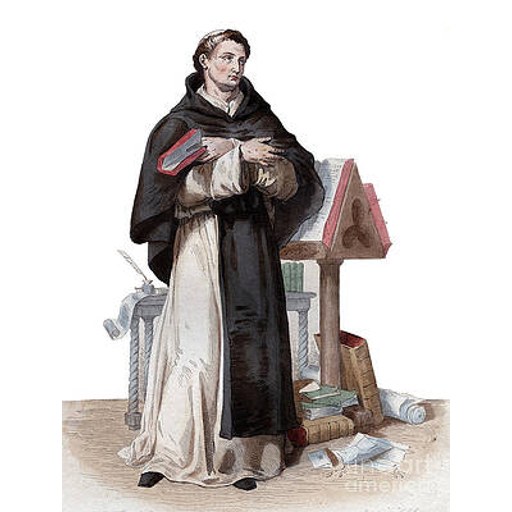
https://fineartamerica.com/art/saint+bernard+of+clairvaux
License: unknown
Gerard of Clairvaux
Saint- Life Span
- d. 1138
- Feast Day
- 13 June
- Gender
- male
- Church
- Catholic
Places
Roles & Family
Religious Information
Biography
Gerard of Clairvaux was a Burgundian nobleman and Cistercian monk of the early twelfth century, remembered above all as the elder brother of Bernard of Clairvaux and as cellarer of Clairvaux Abbey. He was born at the family castle of Fontaine, near Dijon, in the Duchy of Burgundy, to Tescelin (called Sorus or le Roux), a knight in ducal service, and Aleth of Montbard, a woman of notable piety whose kindred included other early Cistercian figures. The couple had several sons—among them Guy, Gerard, Bernard, Andrew, Bartholomew, and Nivard—and a daughter, Humbeline. Like his father, Gerard followed a military career in youth and did not at first share the religious conversion that overtook Bernard and most of the household around the time the brothers entered Cîteaux.
When Bernard resolved to join the New Monastery at Cîteaux under Abbot Stephen Harding, he drew with him brothers, kinsmen, and friends, a group whose arrival in 1112 or 1113 is generally credited with transforming the still-fragile Cistercian community. Gerard at first remained a knight. Near-contemporary accounts from Bernard’s circle relate that he was wounded by a lance during a siege, often associated with an action at Grancey, and taken prisoner. In captivity he is said to have undergone a change of heart; after his release he followed the others into Cîteaux. He thus belongs to the well-attested Burgundian noble conversion that gave the early White Monks so many of their first leaders and administrators.
In 1115 Bernard was sent to found Clairvaux in the valley of the Aube. Gerard accompanied him and was made cellarer, the officer charged with the house’s temporal administration—lands, provisions, workshops, and dealings with the outside world. Medieval witnesses, Bernard foremost among them, describe Gerard as practically competent, discreet, and charitable, managing a rapidly expanding abbey while living as a monk of austere observance. Bernard later wrote that Gerard’s skill and integrity freed the abbot for preaching, writing, and the care of souls, and that his brother’s death left him as if deprived of his own hands.
Gerard died at Clairvaux in 1138, traditionally on 13 June, and was buried there. Bernard’s grief is recorded at length in the twenty-sixth of his Sermons on the Song of Songs, an intimate lament that remains the principal narrative source for Gerard’s character and for the emotional world of the early Cistercians. In that sermon Bernard praised his brother’s humility, his care for the poor and for guests, his patience in illness, and his fidelity as a monk. Gerard has been venerated as blessed within the Cistercian Order; the cult is liturgical and local rather than the product of a well-documented papal canonization or beatification of the later medieval type. A precise year of birth is not securely attested in the twelfth-century sources, nor are formal patronages.