Gerland of Agrigento is a saint of the Catholic Church (d. 1100). Gerland of Agrigento's feast day is celebrated on 25 February. Gerland of Agrigento is the patron saint of Agrigento;Archdiocese of Agrigento.
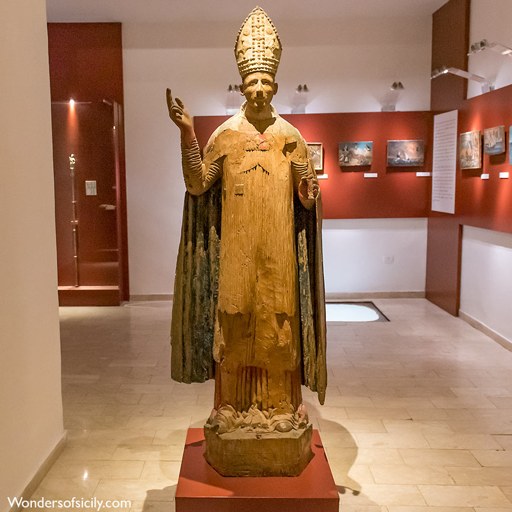
https://wondersofsicily.com/agrigento.htm
License: unknown
Gerland of Agrigento
Saint- Life Span
- d. 1100
- Feast Day
- 25 February
- Gender
- male
- Church
- Catholic
Places
Sacred Place

Roles & Family
Patronage
Agrigento;Archdiocese of Agrigento
Biography
Gerland of Agrigento, known in Italian as San Gerlando and sometimes called Gerland of Besançon, was a Latin bishop of the later eleventh century who headed the restored diocese of Agrigento in Sicily. According to the traditional account, he was born in Besançon in the County of Burgundy, a region then belonging to the Kingdom of Burgundy within the Holy Roman Empire and today in eastern France. Later Sicilian and Burgundian tradition described him as of noble birth and as a kinsman of Roger I of Hauteville, the Norman count who led the conquest of Sicily. Almost nothing is known from contemporary documents about his youth, formation, or the circumstances that brought him into the Norman orbit. Some modern writers have asked whether he might be identical with Gerlandus of Besançon, a clerical scholar who composed a treatise on the calendar and computus, but that identification is not established.
Sicily in the eleventh century was a land of mixed populations after more than two centuries of Islamic rule in many districts. The Normans, beginning with the brothers of the Hauteville family, gradually took the island from the 1060s onward. Agrigento (then often called Girgenti) fell to Norman arms in the later 1080s. Count Roger undertook to restore or newly organize Latin bishoprics as part of the political and ecclesiastical settlement of the island, working in a framework that also involved the papacy, notably Pope Urban II. Gerland was chosen as bishop of Agrigento, becoming the first occupant of the see in its restored Latin form. The exact year of his appointment is not recorded with complete certainty in surviving sources; it is generally placed in the years following the capture of the city, in the late 1080s or early 1090s.
His episcopate coincided with the difficult work of rebuilding Christian institutions in a territory that included Latin newcomers, Greek-rite Christians, Jews, and a large Muslim population. Later hagiography attributes to him the reorganization of the diocese, the promotion of the Latin liturgy, preaching, and efforts toward the conversion of non-Christians. He is also associated with the construction or reconstruction of the cathedral of Agrigento, which in subsequent centuries was dedicated to him under the title of San Gerlando. Independent eleventh-century charters that would allow a detailed reconstruction of his administration are few, so much of the picture of his pastoral activity depends on later local tradition.
Gerland died in Agrigento on 25 February 1100 and was interred in the cathedral. Veneration of him as a saint grew around his tomb. He became the principal patron of the city of Agrigento and of its diocese (now an archdiocese). His feast day is 25 February. The cathedral that bears his name remains the center of his cult, and he is remembered in Sicilian religious history as a founding figure of the post-conquest Latin church in that part of the island.