German of Novgorod is a saint of the Catholic Church.
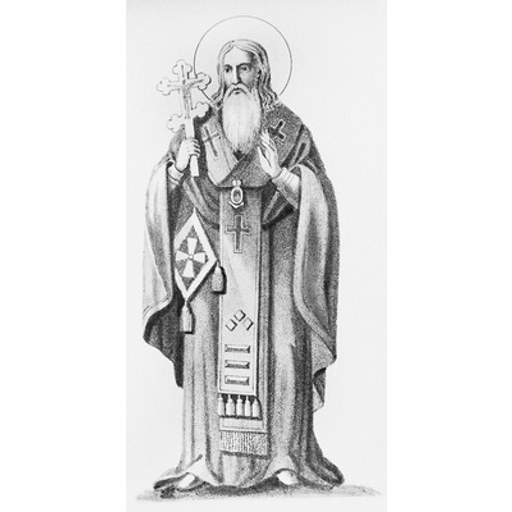
AnonymousUnknown author
License: Public domain
German of Novgorod
Saint- Gender
- male
- Church
- Catholic
Places
Relics & Where to Venerate
Location unknown
The bodily remains of German of Novgorod are a first-class relic. Venerated at Saint Sophia Cathedral.
Roles & Family
Biography
German of Novgorod was a bishop of the Orthodox Church who occupied the episcopal throne of Novgorod in the second half of the eleventh century. Contemporary chronicles provide only the barest outline of his career. He became bishop in 1078 after the death of his predecessor Theodore and remained in office until his own death some seventeen or eighteen years later. No information has survived concerning the year or place of his birth, his family background, or his monastic formation, although the requirements of Orthodox canon law make it certain that he was a monk at the time of his consecration.
The bishopric of Novgorod was one of the oldest in the lands of Rus', established shortly after the official baptism of the region at the end of the tenth century. By German's time the stone Cathedral of Holy Wisdom (Saint Sophia) already dominated the city's skyline, having been begun in the 1040s under Prince Vladimir Yaroslavich and Bishop Luka Zhidiata. Novgorod served as the principal political and economic center of northern Rus' and maintained close commercial ties with Scandinavia and the Baltic. The bishop played an important role in the city's religious life and could also be drawn into its turbulent princely politics, although the extant sources do not record any particular interventions by German himself.
Historical knowledge of German's episcopate is limited almost entirely to the chronological notices in the Novgorod chronicles and the Primary Chronicle. These texts note his accession and his death but do not attribute miracles, writings, missionary journeys, or major building projects to him. This paucity of detail is not unusual for hierarchs of the period whose lives were not later the subject of a dedicated saint's life (vita). His successor, Nikita, who had been a well-known recluse at the Kiev Caves Monastery, received far more hagiographical attention and is commemorated as a wonderworker.
German died in Novgorod in the mid-1090s. Later local tradition in Novgorod sometimes numbered the early bishops among the city's heavenly patrons, yet German does not appear to have received an individual feast day in the Menaion or a widely circulated vita. No reliable account of his burial place has been preserved, though interment in the Cathedral of Holy Wisdom was the normal practice for Novgorod's hierarchs. The figure of German thus remains that of a historically attested but biographically obscure churchman who helped maintain the Orthodox hierarchy in northern Rus' during a formative century.