Germanicus is a saint of the Catholic Church. Germanicus's feast day is celebrated on 19 January.
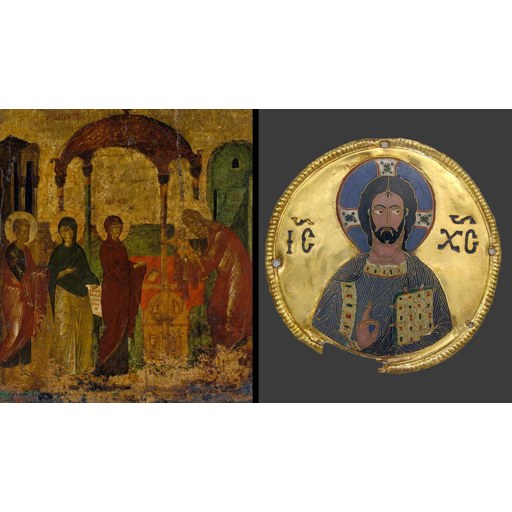
https://www.thecollector.com/byzantine-art-iconography/
License: unknown
Germanicus
Saint- Feast Day
- 19 January
- Gender
- male
- Church
- Catholic
Places
Roles & Family
Biography
Germanicus was a second-century Christian of Smyrna, in the Roman province of Asia, whose death in the public arena is recorded in the letter of the Smyrnaean church known as the Martyrdom of Polycarp. That document, generally dated by modern scholars to the later second century and widely regarded as among the earliest authentic martyr acts, introduces him as a young man who, when others were weakening under the threat of the wild beasts, displayed notable endurance. The proconsul urged him to recant and appealed to his youth; Germanicus instead pulled the animal toward himself, seeking, in the letter's words, a swifter departure from an unrighteous and godless world. His conduct is presented as strengthening the rest of the Christian prisoners.
The same narrative links his martyrdom directly to the subsequent search for Bishop Polycarp. After Germanicus had been killed and other Christians had suffered, the crowd in the stadium shouted for Polycarp to be found. Germanicus therefore functions in the text both as an exemplary youthful martyr and as a catalyst for the bishop's arrest. The games in question took place at Smyrna; the letter does not name the reigning emperor in a way that has produced universal agreement, and proposed dates for the persecution range chiefly through the 150s, with some scholars preferring a year in the 160s. No independent inscription or civic record confirms the episode.
Western liturgical tradition commemorates Germanicus on 19 January. The Roman Martyrology records him at Smyrna in the time of Marcus Antoninus and Lucius Aurelius, stating that he was consigned to the beasts and, by divine grace, overcame their ferocity. This January date is a feast day, not a securely reconstructed calendar date of death; the Smyrnaean letter associates the arena events with the period just before Polycarp's execution, which that text dates in February by the local calendar. In the Greek East, Germanicus is sometimes remembered in connection with Polycarp rather than on a separate January feast. Eusebius of Caesarea incorporated the Smyrnaean letter into the fourth book of his Ecclesiastical History, which ensured that Germanicus's name circulated in both Greek and Latin Christianity.
Nothing verifiable is known of his family, birthplace, or occupation. He is not recorded as a bishop, priest, deacon, or member of a religious order, nor as a husband or father. His cult did not generate a medieval dossier of miracles, a known tomb, or a list of patronages. Later writers repeated the arena scene as a moral example of contempt for life in an idolatrous empire, but they added no new historical facts. Germanicus remains a figure attested by one early community letter, by Eusebius's quotation of it, and by subsequent martyrologies.