Gerontius of Cervia is a saint of the Catholic Church (d. 501). Gerontius of Cervia's feast day is celebrated on 9 May. Gerontius of Cervia is the patron saint of Cagli.
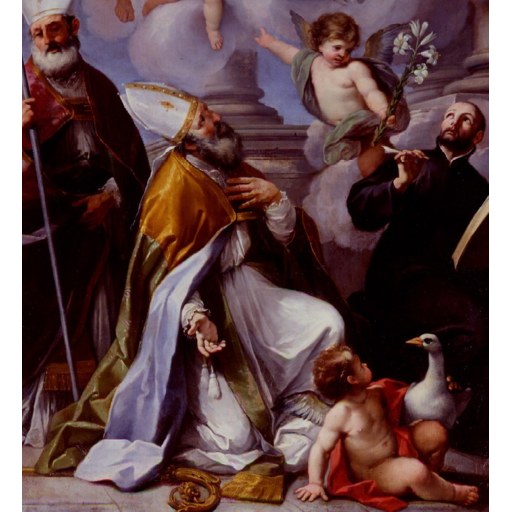
Alberto Mazzacchera
License: Public domain
Gerontius of Cervia
Saint- Life Span
- d. 501
- Feast Day
- 9 May
- Gender
- male
- Church
- Catholic
Places
Roles & Family
Patronage
Cagli
Biography
Gerontius of Cervia, known in Italian as San Geronzio, was a bishop of the late fifth and early sixth centuries who held the see of Cervia on the Adriatic coast of Emilia-Romagna in northern Italy. In his own lifetime the town was still commonly called Ficocle, the older name of the settlement that later became Cervia. Almost nothing can be established about his origins, family, education, or early career. No contemporary document records his birth, parentage, or the date of his episcopal consecration. He enters the historical record only as ordinary of Cervia during the pontificate of Pope Symmachus and the reign of the Ostrogothic king Theodoric in Italy, a period when the Western imperial administration had already collapsed and Arian Gothic rule framed the political life of the peninsula.
In 501 Gerontius travelled to Rome to take part in a synod convened by Pope Symmachus. That gathering belonged to the troubled years of the Laurentian schism, when rival claims to the papacy and accusations against Symmachus had drawn bishops from across Italy to the city. After the synod closed he set out for home along the Via Flaminia, the principal highway linking Rome with the Adriatic and the region of Ravenna. Near Cagli, in the Apennine district then described as Picenum, he was attacked and killed. Later tradition identifies the assailants as Ostrogothic soldiers or as brigands. Because the Ostrogoths were predominantly Arian, medieval hagiographers presented the killing as a martyrdom suffered for the Catholic faith. The Roman Martyrology commemorates him as a bishop slain by the impious while returning from Rome, and assigns his feast to 9 May.
His body was buried at Cagli, the place of his death, and a local cult developed around his tomb. Cagli adopted him as its principal patron saint, and his memory was preserved in the liturgy of that church and in the general Roman Martyrology. Relics associated with him have been venerated in Cagli for centuries. Cervia, the city of his episcopal see, remembers him as one of its early bishops, though the city’s later principal patrons are other saints. No formal process of canonization in the later medieval or modern sense is recorded; his cult belongs to the ancient, so-called pre-congregation veneration of martyrs and holy bishops rather than to a named papal decree of canonization or beatification.
The written evidence for Gerontius remains extremely slender. Apart from the notice of his presence at the Roman synod of 501 and the subsequent martyrological tradition, no letters, sermons, or administrative acts of his survive. Historians therefore treat the outline of his last journey as reasonably secure while regarding later embroideries—detailed dialogues with his killers, miraculous signs at the tomb, and precise genealogies—as unverifiable legend. He stands as a representative figure of the Italian episcopate at the moment when the Western Empire had given way to Ostrogothic rule and when attendance at papal synods still bound the bishops of the peninsula to Rome.