Gezelinus von Schlebusch is a blessed of the Catholic Church. Gezelinus von Schlebusch's feast day is celebrated on 6 August. Gezelinus von Schlebusch is the patron saint of Schlebusch;against fever.
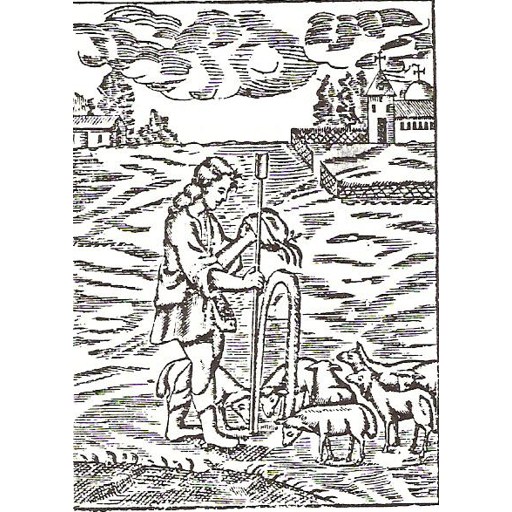
Unknown authorUnknown author
License: Public domain
Gezelinus von Schlebusch
Blessed- Feast Day
- 6 August
- Gender
- male
- Church
- Catholic
Places
Roles & Family
Patronage
Schlebusch;against fever
Biography
Gezelinus von Schlebusch, also called Gezelin or Giselinus, was a twelfth-century Christian hermit in the Bergisches Land of the lower Rhine region, in the area of present-day Schlebusch (now a district of Leverkusen in North Rhine-Westphalia, Germany). Almost nothing about his family, birthplace, or early life can be verified from contemporary records. He is known through later local tradition and through the chapel and well that preserved his memory. He belongs to the large number of rural hermits whose holiness was recognized by neighboring communities rather than by a detailed written vita composed in his own century.
Later tradition associated Gezelinus with the Cistercian abbey of Altenberg, founded in the 1130s a short distance from Schlebusch. It is not certain whether he was a professed Cistercian monk, a lay brother, or an independent hermit who lived under the spiritual influence of the new abbey. What the tradition consistently reports is a life of solitude, prayer, fasting, and simple work in a forest cell near Schlebusch. A spring later called the Gezelinus-Pütz was linked to him; its water was popularly used against fever. Peasants of the district regarded him as a holy man already in his lifetime.
After his death, which local memory places in the first half of the twelfth century, Gezelinus was buried at or near his hermitage. A chapel, the Gezelinuskapelle, was built at Schlebusch and became the center of a modest pilgrimage. The chapel was renewed several times in subsequent centuries and remains standing as a monument of local Catholic devotion in the Archdiocese of Cologne. Gezelinus was venerated as blessed on the basis of this immemorial cult; no papal canonization bull or formal beatification decree issued by a named pontiff is known.
Written sources close to his lifetime are lacking, which is typical for an obscure Rhenish hermit of the High Middle Ages. Notices in later liturgical calendars, local histories, and the continuous existence of the chapel and well form the main evidence. His feast has been kept locally on 6 August. He is remembered as a patron of Schlebusch and was invoked against fever. Gezelinus illustrates the eremitical current that accompanied the Cistercian expansion in the twelfth-century Rhineland, even though the precise facts of his biography remain beyond recovery.