Gisela of Hungary is a blessed of the Catholic Church (d. 1065). Gisela of Hungary's feast day is celebrated on 7 May.
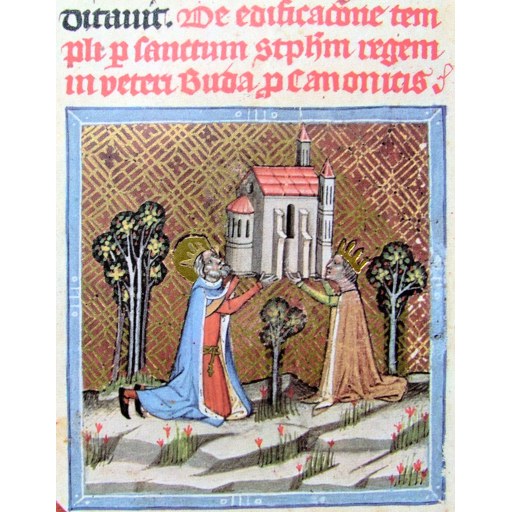
photo taken by uploader User:Csanády
License: Public domain
Gisela of Hungary
Blessed- Life Span
- d. 1065
- Feast Day
- 7 May
- Gender
- female
- Church
- Catholic
Places
Roles & Family
Religious Information
Biography
Gisela of Hungary, also known as Gisela of Bavaria, was a princess of the Ottonian house who became the first queen consort of Hungary as the wife of King Stephen I. She was the daughter of Henry II, Duke of Bavaria, called Henry the Wrangler, and of Gisela of Burgundy, and she was the sister of the future Holy Roman Emperor Henry II. Born in Bavaria in the late tenth century, she was raised in a ducal household closely connected with the imperial church and with Ottonian monastic reform. Strictly contemporary evidence for her childhood is thin; later Hungarian chronicles and Bavarian convent tradition supply most of what is repeated about her early years.
In the mid-990s she was married to Stephen, son of Grand Prince Géza of the Hungarians, in a match meant to bind the Magyar ruling family to Latin Christendom and to the Ottonian empire. Bavarian clergy, knights, and artisans are said to have accompanied her eastward. After Stephen received a royal crown from the papacy around the year 1000, Gisela became queen of a newly recognized Christian kingdom. Charters and later narrative sources associate the couple with the endowment of bishoprics, Benedictine monasteries, and churches that formed the framework of the Hungarian Church, and with the promotion of Latin liturgy and Christian royal ceremonial at court.
Gisela and Stephen had several children. The only son who reached adulthood was Prince Emeric, prepared for the succession but killed in a hunting accident in 1031. Other children appear to have died young. Emeric’s death left the dynasty without a clear heir and helped produce the succession crisis that followed Stephen’s death in 1038. In the unrest that followed, Gisela was stripped of much of her property and treated as a political hostage by rival factions. German military intervention in the early 1040s enabled her to leave Hungary and return to Bavaria.
She spent her last years as a nun at the convent of Niedernburg in Passau, a Benedictine community with family ties to the Bavarian ducal house. Tradition places her death on 7 May in the mid-eleventh century, conventionally 1065, and her burial in the convent church, where her tomb became a centre of local devotion. The Catholic Church venerates her as Blessed Gisela; her feast is kept on 7 May, especially in Hungary and in the Diocese of Passau. Together with her husband Saint Stephen and her son Saint Emeric she is remembered in connection with the Christianization of Hungary, though historians caution that the surviving picture of her life is shaped as much by later hagiography as by contemporary record.