Goar of Aquitaine is a saint of the Catholic Church (d. 649). Goar of Aquitaine's feast day is celebrated on 6 July. Goar of Aquitaine is the patron saint of innkeepers;potters;vine growers;hoteliers;hospitality;Sankt Goar.
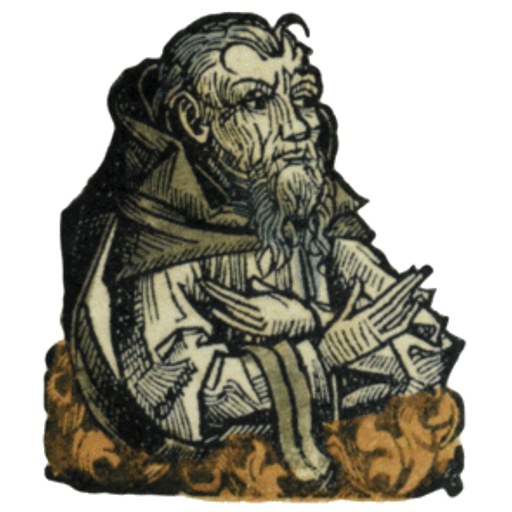
Hartmann Schedel, et al.
License: Public domain
Goar of Aquitaine
Saint- Life Span
- d. 649
- Feast Day
- 6 July
- Gender
- male
- Church
- Catholic
Places
Roles & Family
Patronage
innkeepers;potters;vine growers;hoteliers;hospitality;Sankt Goar
Biography
Saint Goar of Aquitaine, known in Latin as Goaris, was a priest and hermit of the seventh century whose cult developed along the Middle Rhine. Later medieval tradition, above all the ninth-century vita composed by Wandalbert of Prüm, presents him as a native of Aquitaine in southwestern Gaul, born of a family of some standing, and ordained to the priesthood in his own country. No contemporary document records his birth, and the date often repeated in modern notices remains conjectural. After exercising the priestly ministry in Aquitaine, he left his homeland and travelled into Austrasia, settling on the left bank of the Rhine in the neighbourhood of Oberwesel, at the site that afterwards became the town of Sankt Goar.
There he built a small chapel in honour of the Virgin Mary and a hospice in which he received travellers, boatmen, and the poor who used the river. The combination of eremitical prayer with practical hospitality is the most consistent feature of his memory. His reputation for holiness and for miracles drew visitors and also, according to the legend, the hostility of local clergy. He was denounced to Rusticus, bishop of Trier, as a man of worldly or even scandalous life, the charge turning in particular on the fact that women were among those he sheltered. Summoned to Trier, he was said to have been vindicated by wonders: hanging his cloak upon a sunbeam, and the testimony of a newborn child who spoke in his defence. The same tradition relates that King Sigebert III of Austrasia then offered him the bishopric of Trier, which Goar refused, returning to his cell by the Rhine.
He died, according to the received chronology, on 6 July in the mid-seventh century, most notices giving the year 649, at or near his hermitage. He was buried on the spot. In the Carolingian age a church rose over the tomb; it became a collegiate church (Stiftskirche) whose canons fostered the pilgrimage. The settlement that grew around the shrine took the name Sankt Goar. Because the principal Life was written some two hundred years after the events it describes, historians treat the miracle cycle and many anecdotal details with caution; the outline of an Aquitanian priest who established a hospice on the Rhine in the seventh century, and who was honoured at Trier and along the river, is the stable core of the tradition.
His feast is kept on 6 July. He is invoked as patron of innkeepers, potters, and vine-growers, and more broadly of hospitality, associations that reflect the hospice he kept on a busy waterway. He is also the patron saint of the town of Sankt Goar. The Roman Martyrology commemorates him as a priest and confessor. No reliable source records that he belonged to a formal religious order, married, or had children; the consistent picture is that of a celibate priest living as a hermit.