Guy Pierre de Fontgalland is a servant of god of the Catholic Church (1913 - 1925).
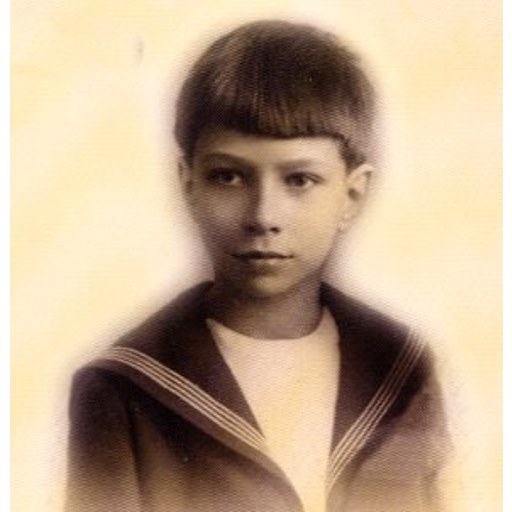
Inconnu, mort depuis plus de 70 ans
License: Public domain
Guy Pierre de Fontgalland
Servant of God- Life Span
- 1913 - 1925 (age 12)
- Gender
- male
- Church
- Catholic
Places
Roles & Family
Biography
Guy Pierre de Fontgalland was born in Paris on 30 November 1913, the son of Count Pierre de Fontgalland and Marie de Fontgalland, née de Cadoudal. He belonged to a French aristocratic family of traditional Catholic practice and was baptized in infancy in the French capital. His earliest years coincided with the First World War; he grew up in Paris in the devout milieu of early twentieth-century French Catholicism, in which Eucharistic piety, Marian devotion, and missionary vocations were strongly emphasized in elite and popular religious culture alike. Surviving accounts of his childhood come chiefly from family testimony and from hagiographical booklets published after his death rather than from independent contemporary archives.
Biographies written in the interwar period present him as a child of unusual recollection and obedience, with a marked attachment to the Mass, the Eucharist, and the Virgin Mary. He made his First Holy Communion in 1921, an episode that later writers treated as the centre of his short spiritual life. He is said to have spoken of a desire to become a priest and a missionary. These traits were interpreted by his family and by later promoters of his memory as signs of holiness, though they must be read in the context of a literary genre that, in France after 1918, readily cast pious children as models of reparation and apostolate. He was never a member of a religious order and remained a lay child in the care of his parents.
In January 1925 he fell ill and died in Paris on 24 January 1925, aged eleven. The precise medical diagnosis is not established with complete consistency in the sources commonly cited, and should not be stated more firmly than the record allows. His death, coming after a brief life already framed by his family as one of exceptional piety, was followed by a rapid spread of his reputation. Pamphlets, photographs, and short lives circulated in French and in translation; reports of favours attributed to his intercession appeared in Catholic periodicals. For a time he was grouped in popular devotion with other twentieth-century children proposed as examples of holiness.
A cause for beatification was introduced in the Archdiocese of Paris in the 1930s, during the pontificate of Pius XI, when interest in child candidates for the altars was relatively strong in parts of Catholic Europe. He was never beatified and never canonized, and he has no feast on the General Roman Calendar. Later official attention to the cause did not result in a decree of heroic virtue that would be universally acknowledged in standard reference works, and historical knowledge of his interior life remains dependent on partisan and familial sources. He is best understood as a figure of French popular Catholic memory in the first half of the twentieth century: a Parisian child of the nobility whose brief life was written into the language of Eucharistic and missionary piety, without ever receiving formal recognition as a blessed or a saint of the Catholic Church.