Gwen of Talgarth is a saint of the Catholic Church. Gwen of Talgarth's feast day is celebrated on 18 October. Gwen of Talgarth is the patron saint of St Wenn, Cornwall;Morval, Cornwall;Talgarth, Powys.
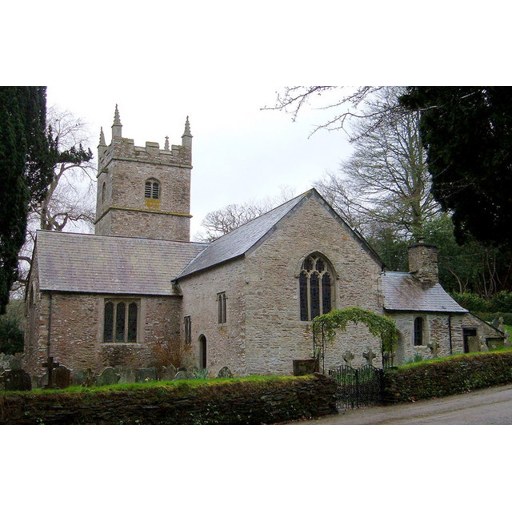
Bill Booth
License: CC BY-SA 2.0
Gwen of Talgarth
Saint- Feast Day
- 18 October
- Gender
- female
- Church
- Catholic
Places
Roles & Family
Patronage
St Wenn, Cornwall;Morval, Cornwall;Talgarth, Powys
Biography
Saint Wenna, known in Welsh as Gwen and commonly identified in later tradition with Gwen of Talgarth, is an early medieval Celtic saint whose cult is attested in both Wales and Cornwall. Medieval Welsh genealogical tracts, notably the texts known as De situ Brecheniauc and Cognatio Brychan, present her as one of the many children of Brychan, the semi-legendary fifth-century ruler of the kingdom of Brycheiniog in the hill country of what is now southern Powys. Brychan's family was credited in these sources with an extraordinary number of saintly sons and daughters who were said to have evangelized South Wales, the opposite coasts of the Bristol Channel, and parts of Brittany. Within that family grouping Wenna is sometimes described as a sister of Saint Nectan of Hartland in Devon. Other, conflicting genealogies occasionally link a Gwen with the family of Saint Non and Saint David of Menevia, which illustrates how fluid these pedigrees became in the Middle Ages. No contemporary vita of Wenna survives, and no birth or death year can be established from reliable historical evidence. She is conventionally placed in the fifth or early sixth century, the era associated with the Brychan saints and with the wider Age of the Saints in western Britain.
In Wales her principal association is with the town of Talgarth in historic Brecknockshire, a centre closely connected in legend with Brychan's court. Local tradition holds that Gwen of Talgarth was put to death by pagan Saxons and was therefore remembered as a martyr. The parish church of Talgarth, dedicated to Saint Gwendoline, a later medieval form of her name, became the chief focus of her Welsh cult. As with many dedications attributed to children of Brychan, the story of her death is known only from comparatively late antiquarian and hagiographical notices rather than from early charters or chronicles, and modern historians treat the martyrdom narrative as pious tradition rather than as a recoverable historical event. Nothing certain is recorded of her burial place, though later devotion naturally attached itself to the church that bore her name.
In Cornwall she is the patron of the parish of St Wenn, in the central part of the county, whose place-name itself preserves her cult, and of the parish church of Morval near Looe. Cornish tradition regarded her as one of the Welsh holy women who crossed the Severn Sea to preach and to found religious sites in the peninsula during the fifth and sixth centuries. A holy well associated with her memory is recorded in the parish of St Wenn. These dedications, together with the survival of her name in Cornish toponymy, are the strongest evidence that a saint called Wenna or Wenn was venerated in the region by the later Middle Ages, even if the biographical details of her career had already been lost or merged with Welsh legend. She is not known to have founded a religious order, and there is no reliable record of a husband or children; later piety tended to class her among the virgin saints of the Brychan group, but that classification is conventional rather than documented.
Modern scholarship on Celtic hagiography stresses that several distinct holy women named Gwen, Wenna, Wenn, or Gwendoline in Wales, Cornwall, and Brittany have often been conflated both in medieval saint-lists and in modern reference works. Whether the Cornish Saint Wenna and the Welsh Gwen of Talgarth originated as one and the same historical person cannot be demonstrated from the surviving evidence; the identification remains traditional. She held no patriarchal or papal office. She was not the subject of a formal papal canonization or beatification, her cult belonging instead to the pre-congregation era of local episcopal recognition and popular devotion. Western calendars have commonly assigned her feast to 18 October, though as with many obscure Celtic saints the date reflects later liturgical usage rather than an attested anniversary of death.