Hemma of Gurk is a saint of the Catholic Church (d. 1045). Hemma of Gurk's feast day is celebrated on 27 June. Hemma of Gurk is the patron saint of Carinthia;Diocese of Gurk-Klagenfurt;Gurk;pregnant women;women in childbirth;eye diseases.
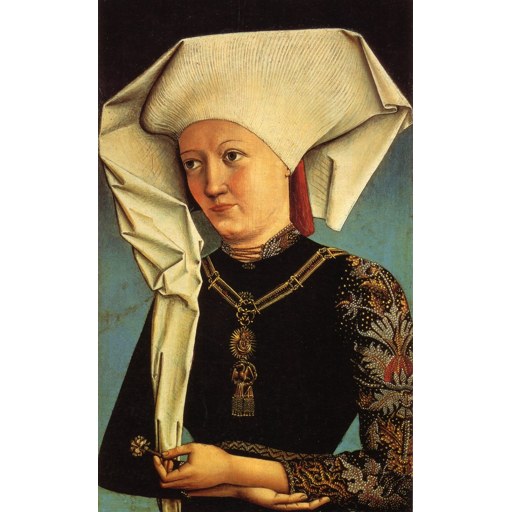
AnonymousUnknown author German Artist active at the Court of Ansbach ()
License: Public domain
Hemma of Gurk
Saint- Life Span
- d. 1045
- Feast Day
- 27 June
- Gender
- female
- Church
- Catholic
Places
Relics & Where to Venerate
Location unknown
The bodily remains of Hemma of Gurk are a first-class relic. Venerated at Gurk Cathedral.
Location unknown
Since 1174 Hemma's relics have been buried in the crypt of Gurk Cathedral
Roles & Family
Religious Information
Patronage
Carinthia;Diocese of Gurk-Klagenfurt;Gurk;pregnant women;women in childbirth;eye diseases
Canonization
Biography
Hemma of Gurk (German: Hemma von Gurk; Slovenian: Hema Krška) was a noblewoman of the eastern Alps whose life, though only partly recoverable from contemporary documents, became the foundation of one of Carinthia’s principal saintly cults. Later medieval and early modern vitae place her birth around 980 and describe her as a member of a family related to the Liutpoldings and Aribonids and to the Ottonian emperors, in particular Emperor Henry II. A persistent tradition, not confirmed by an extant birth record, locates her birth at the castle of Peilenstein (Pilštanj) in the March of Savinja, today in Slovenia. Whatever the exact place of her birth, she belonged to the high nobility that held lands and jurisdictions in Carinthia, in the Sanngau, and in the mining district of Friesach, and she eventually controlled a very large estate.
She married Count William of Friesach, also known as William of the Sanngau, a powerful count whose authority included important silver-mining interests. They had two sons. According to the legendary layer of her biography, the sons were killed in a revolt of miners whom they had oppressed, and Count William himself was murdered, leaving Hemma widowed and without direct heirs. Modern historians treat some of these narrative details with caution, but they agree that Hemma was left a wealthy widow and that she used her property for ecclesiastical foundations rather than for a new secular dynasty. In the years that followed she endowed churches at a number of places in Carinthia, including Gurk and Lieding, and became known for charity toward the poor.
In 1043 she founded a Benedictine monastery at Gurk and granted it a substantial portion of her remaining lands. Tradition holds that she withdrew to live in connection with this community in her last years, though it is not certain that she made a formal monastic profession. She died on 27 June 1045 and was buried at Gurk. In 1072 Archbishop Gebhard of Salzburg established the Diocese of Gurk; the nunnery was replaced by a cathedral chapter of canons, and Gurk Cathedral rose over the site. Hemma’s tomb in the cathedral crypt became a pilgrimage shrine. Her relics were translated in the twelfth century, an act that both expressed and further encouraged local veneration.
Through the later Middle Ages and the early modern period Hemma was honored as a regional saint, especially in Carinthia and in areas of present-day Slovenia associated with her family. The papacy confirmed her immemorial cult, and on 5 January 1938 Pope Pius XI formally canonized her (an equipollent canonization based on the longstanding cult). She is the patron saint of the Austrian state of Carinthia and of the Diocese of Gurk-Klagenfurt. Popular devotion has also regarded her as a helper of pregnant women and of those suffering from eye diseases. Her liturgical feast is celebrated on 27 June. Gurk Cathedral, with her grave in the crypt, remains the principal center of her cult.