Herculan is a saint of the Catholic Church (d. 549). Herculan's feast day is celebrated on 7 November. Herculan is the patron saint of Perugia.
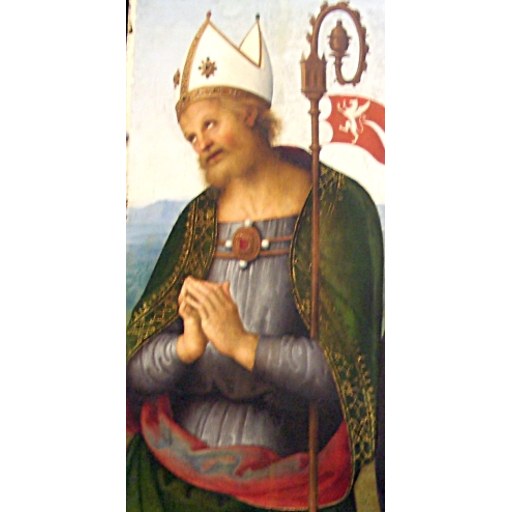
https://catholicsaints.info/saint-herculanus
License: unknown
Herculan
Saint- Life Span
- d. 549
- Feast Day
- 7 November
- Gender
- male
- Church
- Catholic
Places
Roles & Family
Patronage
Perugia
Biography
Saint Herculanus (Latin Herculanus; Italian Ercolano; also rendered Herculan) was bishop of Perugia in Umbria during the mid-sixth century. Almost everything that can be said of him with any confidence derives from a single near-contemporary narrative: Book III, chapter 13 of the Dialogues of Pope Gregory the Great, composed in the 590s. Gregory presents Herculanus as a holy bishop who was put to death after the Ostrogothic king Totila captured Perugia. No independent sixth-century document records his parentage, place of birth, date of birth, or the year of his episcopal consecration, and later medieval elaborations of his life cannot be verified.
According to Gregory, Totila, after a prolonged siege, took the city and ordered that the bishop be killed in a particularly cruel manner: a strip of skin was to be torn from his head to his heels and he was then to be beheaded. The soldiers charged with the execution, Gregory says, contented themselves with beheading him upon the city walls. Some forty days later the body was recovered for burial and was found with the head joined to the trunk as if it had never been severed, a circumstance Gregory treats as a miracle confirming the bishop’s sanctity. The fall of Perugia itself is placed by the historian Procopius in 549, during Totila’s campaigns in the Gothic War, and that year is the date conventionally assigned to Herculanus’s death, though some older martyrological notices give 547.
The wider setting is the long struggle between the Ostrogothic kingdom and the East Roman (Byzantine) Empire for control of Italy. Perugia, an ancient Etruscan and Roman centre on the Tiber, changed hands in that conflict; clergy were not spared when cities were stormed. Herculanus’s martyrdom belongs to that pattern of wartime violence rather than to a formal judicial process under Roman law. Nothing reliable is known of his pastoral activity, theological writing, or relations with other Italian bishops of the period. He does not appear among the signatories of contemporary synods that survive, and he held neither the Roman see nor any patriarchal office.
Local veneration in Perugia is ancient. He became the city’s principal patron. A church dedicated to him, Sant’Ercolano, was built against the ancient walls at the site associated with his death and burial; his relics have been kept and honoured there and in the cathedral of San Lorenzo. The Roman Martyrology commemorates him on 7 November as bishop and martyr of Perugia. Beyond that local cult and Gregory’s story, the historical record is thin. Claims about his earlier career, family, or precise circumstances of election as bishop rest on later legend and should be treated as unverified.