Hermagoras of Aquileia is a saint of the Catholic Church. Hermagoras of Aquileia's feast day is celebrated on 12 July. Hermagoras of Aquileia is the patron saint of Aquileia;Udine;Archdiocese of Udine.
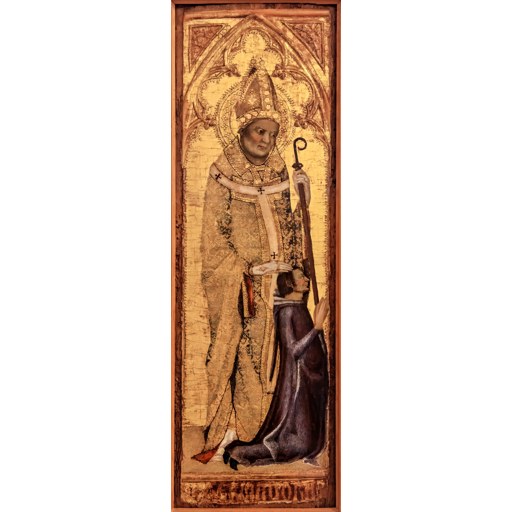
Didier Descouens
License: Public domain
Hermagoras of Aquileia
Saint- Feast Day
- 12 July
- Gender
- male
- Church
- Catholic
Places
Roles & Family
Patronage
Aquileia;Udine;Archdiocese of Udine
Biography
Hermagoras of Aquileia (Latin Hermagoras; Italian Sant'Ermagora; also attested as Hermenagoras) is venerated as a Christian martyr and as the first bishop of Aquileia, the leading Roman city of the upper Adriatic. No contemporary inscription, letter, or chronicle records him, and virtually every biographical detail depends on later hagiography. The chief narrative source is the Passio Hermachorae et Fortunati, a Latin martyrdom account whose surviving form is generally dated by scholars to the early Middle Ages, most often the eighth century, although it may preserve older local memories. In that tradition the evangelist Mark preached at Aquileia before continuing to Alexandria, chose Hermagoras to lead the new community, and either consecrated him or sent him to Rome to be consecrated bishop by the apostle Peter. Hermagoras then returned to Aquileia with the deacon Fortunatus.
The legend continues that the two men evangelized the region of Venetia and won many converts. Their success provoked a Roman official named Sebastius (the name varies in the manuscripts), placed in the reign of Nero. Hermagoras and Fortunatus were arrested, tortured in the conventional manner of late antique passion literature, and beheaded. The Roman Martyrology commemorates them together on 12 July at Aquileia, styling Hermagoras a bishop and Fortunatus a deacon. Traditional chronology assigns the martyrdom to about the year 70, but that date rests solely on the legendary link with Mark, Peter, and Nero and is not supported by any independent first-century evidence.
Critical historiography regards the apostolic foundation of the church of Aquileia as a later construction. Christianity is firmly documented in the city by the early fourth century, when Bishop Theodore of Aquileia attended the Council of Arles in 314 and when the great basilica with its mosaic pavement was built. There is no secure evidence for an episcopal see in the first century. Many historians consider it possible that a real martyr or bishop named Hermagoras lived in the third century and that his cult was subsequently projected back into the apostolic age. The Mark-Hermagoras story became especially serviceable between the sixth and eighth centuries, when the see of Aquileia, which had taken the title of patriarch, was in conflict with Grado and later with Venice, churches that likewise claimed a connection with Saint Mark.
The cult of Hermagoras and Fortunatus is nevertheless ancient and central to the religious identity of Friuli. They were traditionally buried at Aquileia. When the patriarchate divided in the sixth century and the line in communion with Rome withdrew to Grado, relics attributed to the two saints were said to have been carried there; in later centuries Udine and other churches of the region also claimed portions. Hermagoras is honoured as patron of the city of Aquileia and, with Fortunatus, as a principal patron of Udine and of the Archdiocese of Udine, which after the eighteenth-century suppression of the Patriarchate of Aquileia inherited much of its heritage. In art he is shown as a bishop, often beside his deacon and sometimes with Saint Mark. The liturgical memorial of the pair remains 12 July.