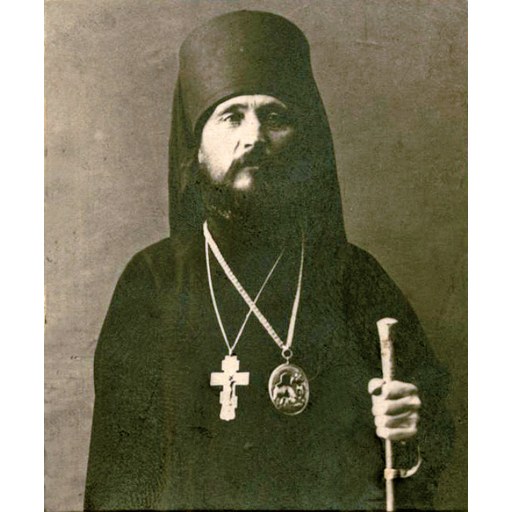
Herman is a saint of the Eastern Orthodox Church (d. 1567). Herman's feast day is celebrated on 6 November.
НКВД
License: Public domain
Herman
Saint- Life Span
- d. 1567
- Feast Day
- 6 November
- Gender
- male
- Church
- Eastern Orthodox
Places
Roles & Family
Biography
Saint Herman (also rendered German; in the world of the boyar Polev or Sadyrev-Polev family) was a sixteenth-century Russian Orthodox monk and hierarch of the first generation of the Kazan archbishopric. He was born in the early sixteenth century in the town of Staritsa, then in the Grand Duchy of Moscow. No contemporary source preserves an exact year of birth. He received the monastic tonsure at the Joseph-Volokolamsk Monastery, the house associated with Saint Joseph of Volotsk, where cenobitic discipline, liturgical regularity, and the copying of books were strongly emphasized. Formed in that tradition, he became known for personal austerity and for learning.
He later served as abbot of the Dormition Monastery in Staritsa. After Tsar Ivan IV conquered the Kazan Khanate in 1552, the Russian Church created a new archbishopric for the Volga region. In 1555 Saint Gurias was consecrated the first Archbishop of Kazan, and Herman was sent with him. Herman was made archimandrite of the Dormition Monastery at Sviyazhsk, the island fortress that had been the Russian base for the Kazan campaign. From Sviyazhsk he took part in missionary work among Tatar and other local populations, in the building of churches, and in organizing monastic and parish life in a recently conquered territory.
When Archbishop Gurias died, Herman was consecrated Archbishop of Kazan and Sviyazhsk in 1564. He continued the pastoral and missionary work of his predecessor, seeking to establish Orthodox hierarchical and sacramental life among Russian settlers and among converts. Later ecclesiastical memory presents him as a bishop of strict personal life who combined administration with ascetic practice.
In 1566, after Metropolitan Athanasius of Moscow retired, Ivan IV summoned Herman to the capital with the apparent intention of making him metropolitan. According to later hagiographical tradition, Herman reproved the tsar for the Oprichnina, instituted in 1565, and would not bless policies he regarded as contrary to Christian conduct. He was not installed as metropolitan. He remained in Moscow and died there on 6 November 1567. The precise cause of death is not established by strictly contemporary evidence; later lives sometimes connect it with the oprichnina, while the historical record itself is sparse. He was first buried in Moscow.
In 1595, during the reign of Tsar Feodor I, his relics were reported found incorrupt and were translated to the Dormition Monastery at Sviyazhsk. He thereafter received liturgical veneration in the Russian Orthodox Church and is numbered among the hierarchs and wonderworkers of Kazan. His principal feast is 6 November on the Julian calendar, with an additional commemoration of the translation of the relics. He is remembered for his share in planting Orthodox Christianity in the Middle Volga in the generation after the fall of Kazan.