Hermit James is a saint of the Catholic Church. Hermit James's feast day is celebrated on January 28.
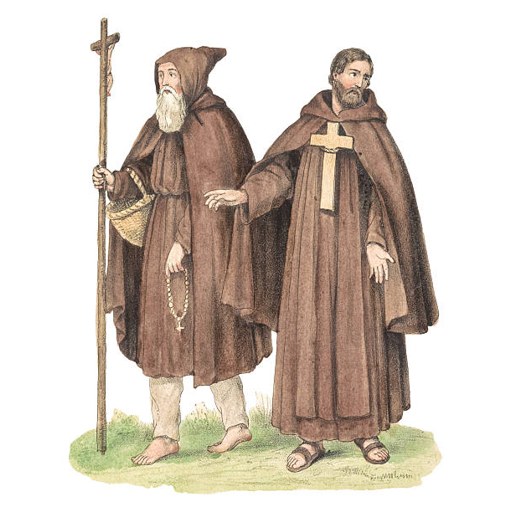
https://gettyimages.com/photos/st-john-hermit
License: unknown
Hermit James
Saint- Feast Day
- January 28
- Gender
- male
- Church
- Catholic
Roles & Family
Biography
Hermit James, known in Eastern Christian tradition as the Venerable James the Hermit or James of Palestine, is an obscure sixth-century ascetic commemorated as a saint in the Orthodox Church. Virtually nothing about his life can be confirmed from contemporary historical documents; the surviving notices derive from later synaxaria and menologia that follow the conventional pattern of desert-father hagiography. These texts place his birth and activity in Palestine during the sixth century, a period when eremitic monasticism remained vigorous in the Judaean wilderness and along the Jordan, continuing the earlier traditions associated with Chariton, Euthymius, and Sabas. No reliable source records a precise birth year, family origin, or native town, and modern historians therefore treat even the Palestinian localization as traditional rather than demonstrated.
According to the liturgical accounts, James entered monastic life in youth, first living in community and then withdrawing to a cave for a prolonged period of solitude. He is described as sustaining himself on wild plants, practicing unceasing prayer, and receiving occasional visitors who sought healing or counsel. Such details are typical of the genre and cannot be independently verified; they serve to present him as an exemplar of the eremitic ideal rather than as a figure whose career can be reconstructed year by year. No evidence indicates that he ever held clerical office, founded a coenobium, or left written works. His vocation remained that of a solitary, consistent with the many unnamed or little-documented hermits who populated the Palestinian and Syrian deserts in late antiquity.
The same sources state that he died in peace after many years of asceticism, without specifying a date, place of death, or burial site. Veneration of James developed within the Byzantine liturgical calendar; his memory is kept on 28 January. Because he belongs to the pre-congregational era of sanctity, there was no formal papal or patriarchal act of canonization in the later medieval sense. No patronage of particular places, professions, or causes is attached to him in the standard lists, and no relics or cult center can be identified with certainty. The scarcity of information is itself characteristic: countless early hermits were remembered locally for a time and then reduced to a brief entry in a synaxarion.
In the broader history of Eastern monasticism, figures such as Hermit James illustrate the persistence of the anchoritic life alongside the more organized lavras and coenobia of sixth-century Palestine. The political and ecclesiastical turbulence of the age—Persian invasions, Christological controversy, and the gradual Islamization of the region—left little room for detailed biography of solitaries who deliberately sought obscurity. Consequently any modern account must remain cautious, distinguishing the spiritual portrait offered by the Church’s memory from the meager residue of verifiable fact. James is therefore best understood as a representative of an entire class of Palestinian hermits rather than as an individual whose personal history can be narrated with chronological or geographical precision.