Heron is a saint of the Catholic Church. Heron's feast day is celebrated on October 17.
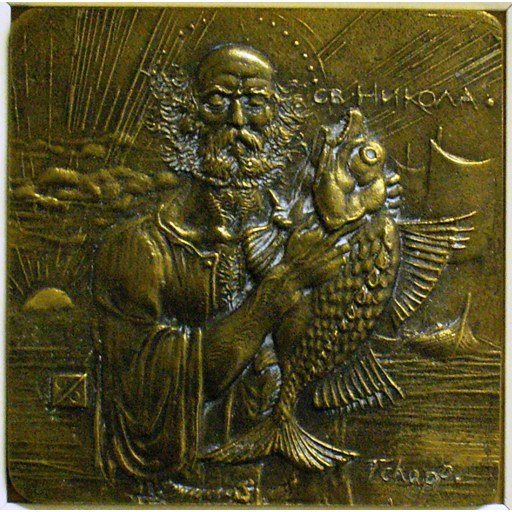
https://en.wikipedia.org/wiki/Icon
License: unknown
Heron
Saint- Feast Day
- October 17
- Gender
- male
- Church
- Catholic
Places
Roles & Family
Biography
Saint Heron, also transmitted in Greek and Latin as Hero or Heros, was a bishop of Antioch in the second century. The principal early witness to his place in history is Eusebius of Caesarea, who in the Ecclesiastical History records Hero as successor of Ignatius of Antioch and as predecessor of Cornelius in that see. In Eusebius’s reckoning he belongs to the earliest post-apostolic succession of one of the chief churches of the Roman East. No contemporary text preserves a year of birth or of death. Later chronological schemes that place his episcopate under Trajan or Hadrian are inferences from the succession list, not dates documented in his own lifetime. Nothing reliable is known of his family, education, or place of origin, and no writings attributed to him survive.
Antioch on the Orontes, capital of the Roman province of Syria, was already a foundational Christian center by Heron’s generation. According to the Acts of the Apostles it was there that the disciples were first called Christians, and the community had been a base for the work associated with Barnabas and Paul. In the generation immediately before Heron, Ignatius of Antioch wrote the letters composed on his journey to execution in Rome, which remain among the most important witnesses to church order, eucharistic practice, and Christology in the sub-apostolic age. Later hagiography presents Heron as a disciple of Ignatius who followed his master’s teaching. That picture is chronologically plausible, but it is not confirmed by the Ignatian letters, which do not name a successor, nor by any narrative in Eusebius beyond the fact of succession.
Western liturgical tradition, as given in the Roman Martyrology, commemorates Heron on 17 October and states that at Antioch the holy bishop, successor of blessed Ignatius and follower of his master’s doctrine, was crowned with martyrdom for Christ. Eusebius, who elsewhere records martyrdoms with care, does not describe Hero as a martyr and mentions him only in the episcopal list. The notice of martyrdom therefore rests on later martyrological tradition rather than on a second-century passion narrative comparable to the acts of Ignatius. Whether Heron died in a local persecution or was later honored as a martyr by assimilation to the Ignatian model cannot be determined from the extant evidence. No authentic acts, last words, description of the manner of death, or burial place are preserved in sources that can be checked.
In the later patriarchal catalogues of Antioch, Heron is numbered among the early occupants of a see that came to rank as one of the ancient patriarchates of the Christian East. He was not Bishop of Rome. He belongs to the pre-monastic age of the episcopate, and no religious order is associated with his name. Formal papal canonization or beatification, in the medieval and modern canonical sense, does not apply to a figure whose cult is of antique martyrological origin. No historically secure patronages are attached to him. The name Heron was also borne by other early Christian martyrs, including Alexandrian Christians of the early third century mentioned by Eusebius in connection with the circle of Origen, and by Egyptian martyrs in some calendars; those persons are distinct from the bishop of Antioch. The historically defensible core of his biography remains brief: he governed the church of Antioch after Ignatius, later churches remembered him as a saint and, in the West, as a martyr, and almost every personal particular beyond that succession and that cult has been lost.