Honorat Koźmiński is a blessed of the Catholic Church (1829 - 1916). Honorat Koźmiński's feast day is celebrated on 16 December.
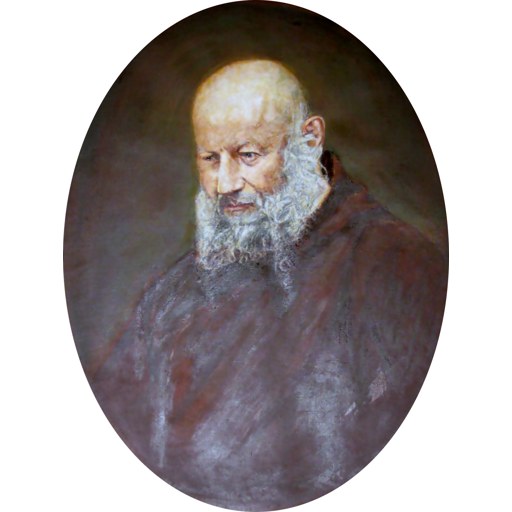
AnonymousUnknown author
License: CC BY 3.0
Honorat Koźmiński
Blessed- Life Span
- 1829 - 1916 (age 87)
- Feast Day
- 16 December
- Gender
- male
- Church
- Catholic
Places
Roles & Family
Religious Information
Canonization
Biography
Honorat Koźmiński was born Wacław Koźmiński on 16 October 1829 in Biała Podlaska, in the Podlasie region of Congress Poland, then under the rule of the Russian Empire. He belonged to a Polish family; his parents were Stefan Koźmiński and Aleksandra, née Kahl. After early schooling he went to Warsaw to study architecture at the School of Fine Arts. In the climate of partition and repression that marked Polish life in the mid-nineteenth century, he became involved as a student in clandestine patriotic activity and at the same time drifted away from religious practice. In 1846 the Russian authorities arrested him and confined him in the Warsaw Citadel. During a grave illness in prison he experienced a decisive conversion, recovering both physical health and Christian faith, and he resolved to devote his life to God.
Released from prison, he entered the Order of Friars Minor Capuchin in 1848 and received the name Honorat. He completed his novitiate and ecclesiastical studies and was ordained a priest in 1852. Stationed in Warsaw, he quickly gained a reputation as a preacher, confessor, and spiritual director. In that capacity he guided Maria Angela Truszkowska in the foundation, in 1855, of the Congregation of the Sisters of St. Felix of Cantalice, the Felician Sisters, who combined contemplative prayer with active service to the poor, the sick, and neglected children. Honorat’s early ministry thus already showed the pattern that would define his life: Franciscan spirituality applied to the pastoral needs of a society living under foreign occupation.
After the collapse of the January Uprising of 1863, the imperial government struck at the Catholic religious orders. From 1864 Honorat was interned with the surviving Capuchin community in the monastery of Zakroczym and forbidden to work in public. In that confinement he developed the distinctive work for which he is remembered: the organization of hidden religious congregations. Members—chiefly women, but also some men—took vows and lived a common spiritual rule while remaining in ordinary secular dress and in ordinary occupations, so that consecrated life and works of mercy could continue when habits, convents, and open novitiates were banned. Over the following decades he founded or shaped a large number of such communities, directing them in large part by letter, giving them constitutions, and forming their members in prayer and in service as teachers, nurses, servants in households, and carers of the poor. The hidden congregations became a major, if necessarily discreet, element of Polish Catholic life in the later nineteenth century.
In 1892 he was moved to the Capuchin friary at Nowe Miasto nad Pilicą, where he remained until his death. Despite declining health and failing eyesight he continued to write, to correspond with the congregations he had founded, and to exercise spiritual direction. He died at Nowe Miasto nad Pilicą on 16 December 1916, during the First World War, before the restoration of Polish independence. Pope John Paul II beatified him on 16 October 1988. His feast is kept on 16 December. Blessed Honorat is regarded as a principal architect of religious life in partitioned Poland and as a model of pastoral ingenuity under persecution; the congregations that descend from his foundations remain active in Poland and beyond.