Hovhannès Ier Mandakouni is a saint of the Catholic Church (d. 490).
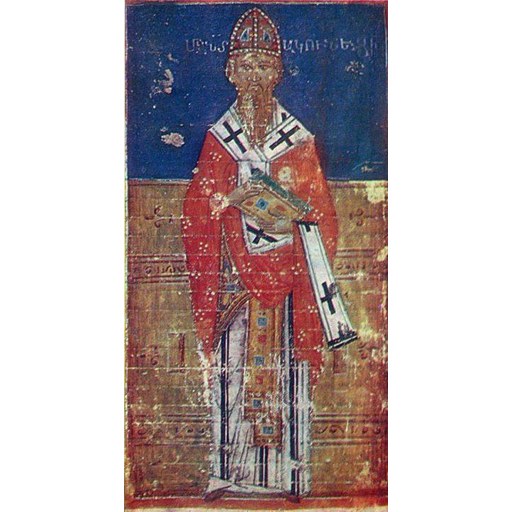
Unknown authorUnknown author
License: Public domain
Hovhannès Ier Mandakouni
Saint- Life Span
- d. 490
- Gender
- male
- Church
- Catholic
Places
Roles & Family
Biography
Hovhannes I Mandakuni (Armenian: Հովհաննես Ա Մանդակունի; also known as John Mandakuni or, in French, Hovhannès Ier Mandakouni) was a fifth-century Catholicos of the Armenian Apostolic Church and one of the principal ecclesiastical writers of early Christian Armenia. He belonged to the Mandakuni, a hereditary nakharar (princely) house of Greater Armenia. Surviving sources do not record his year or place of birth. He occupied the catholicosal throne from 478 until 490, succeeding Catholicos Giut of Arahez, in a period when the see of the Armenian catholicos was established at Dvin in Persarmenia under Sasanian overlordship. Episcopal and catholicosal office in the Armenian Church of this era was drawn from the celibate clergy, and Mandakuni is remembered as a monastic church father rather than as a married parish priest.
His catholicosate fell in the generation after the Battle of Avarayr (451), when Armenian nobles and clergy had resisted Sasanian attempts to impose Zoroastrianism. The later fifth century was marked by continued tension, guerrilla warfare, and negotiation under the Mamikonian sparapet Vahan. The Treaty of Nvarsak in 484, concluded with the Sasanian court, recognized the right of Armenians to practice Christianity and eased official persecution. Mandakuni’s years in office therefore coincided with a partial restoration of church life after decades of conflict. Contemporary and near-contemporary Armenian historical writing, notably the History of Ghazar Parpetsi, describes this political and religious settlement; Mandakuni appears in later tradition as the spiritual counterpart to Vahan’s military and diplomatic leadership, charged with rebuilding discipline among clergy and laity in a devastated country.
A substantial corpus of homilies and liturgical pieces has been transmitted under Mandakuni’s name in Classical Armenian (Grabar). The sermons attack surviving pagan customs, drunkenness, usury, and other social vices, and they call the faithful to repentance, fasting, almsgiving, and regular participation in the church’s rites. They are among the earliest original (non-translated) Armenian preaching texts and are an important witness to moral and pastoral conditions in late-fifth-century Armenia. Later Armenian tradition also credits him with prayers, penitential texts, and arrangements of church services that entered the liturgical inheritance of the Armenian Apostolic Church. Modern philology has questioned the authenticity of some items in the Mandakuni collection, and not every work ascribed to him can be regarded as certainly his; the core image of a late-fifth-century catholicos-preacher and liturgical organizer, however, remains well established in Armenian literary history.
Mandakuni is venerated as a saint in the Armenian Apostolic Church, by traditional recognition rather than by a later, documented act of papal or synodal canonization of the Latin type. Precise details of his death and burial are not preserved beyond the conventional date of 490, which coincides with the end of his tenure; he was succeeded by Babken I of Otmus. No reliable source records a birth year, a specific native town, a place of death more exact than Armenia, or a burial shrine. What can be said with confidence is that he stands as a central figure of the Armenian Church in the decades after Avarayr: a noble-born catholicos, preacher, and liturgical author whose ministry belonged to the reconstruction of Armenian Christian life under Sasanian rule.